
Quotes
Bible Quote Art: A Complete Guide to Scripture Wall Décor

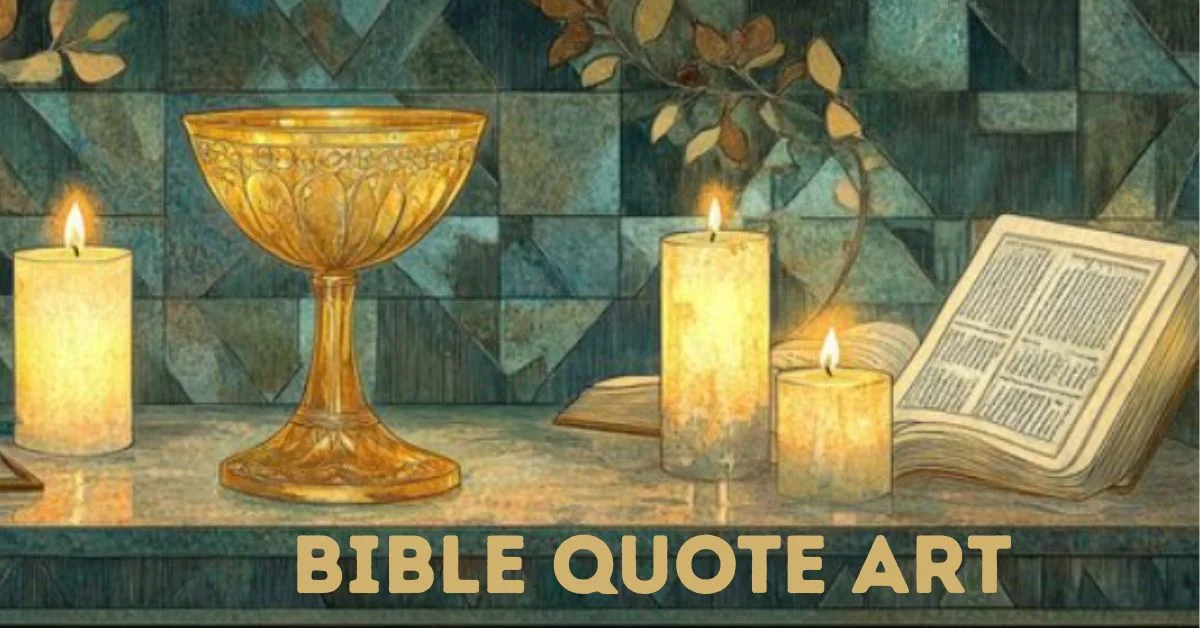
Bible quote art is a simple but powerful way to bring faith into your everyday surroundings. Whether you want to decorate your living room, bedroom, or office, scripture art helps you stay connected to what matters most. This guide covers everything you need to know, from understanding what Bible quote art actually is, to choosing the right verse, picking the right style, displaying it properly, and even making your own. By the end, you will know exactly how to find or create scripture art that feels personal, meaningful, and beautiful in any space.
What Is Bible Quote Art?
Definition and Purpose
Bible quote art is any visual artwork that features a verse or passage from the Bible as its central message. It can be a simple print with clean text, a hand-painted canvas, a framed calligraphy piece, or a digital download you print at home. The purpose is to display words of faith in a way that is visually appealing and spiritually meaningful.
It serves two functions at once. It decorates a space and reminds you daily of something you believe in. That combination is why it has become such a popular category in both Christian home décor and faith-based gifting.
Snippet answer: Bible quote art is artwork that features a Bible verse or scripture passage as its main element. It is used to decorate homes, offices, and churches while keeping faith visible in daily life. It comes in many forms including prints, canvases, digital downloads, and hand-lettered designs.
Why Scripture Art Is Popular Today
People are looking for home décor that feels intentional, not just decorative. A generic motivational quote on a wall feels hollow over time. A Bible verse that has personal meaning does not. That is why scripture art has grown steadily in popularity, especially in Christian households where faith is central to daily life.
Social media has also made it easier to discover beautiful scripture art designs, and platforms like Etsy have made it easier to buy custom or handmade pieces from independent artists who specialize in faith-based work.
Read also: Athletics Motivational Quotes That Actually Push You Further
Types of Bible Verse Art
Wall Art Prints
Printed Bible verse art is the most common type. These are flat paper or cardstock prints, usually sold unframed, that you can put in a frame of your choice. They are affordable, widely available, and easy to swap out if you want a new look. Many are available as instant downloads, which makes them even more accessible.
Digital Downloadable Art
Digital scripture art is exactly what it sounds like. You purchase or download a file, print it yourself at home or at a print shop, and frame it. This option gives you flexibility in sizing and printing quality. It is also one of the more budget-friendly options, with many free versions available on sites like Free Bible Art or Pinterest.
Canvas and Framed Artwork
Canvas prints and pre-framed scripture art are ready to hang straight away. They tend to feel more premium and are popular as gifts. Canvas wraps look modern and work well in living rooms or studies. Pre-framed pieces often have a more traditional feel, which suits bedrooms or entryways.
Hand-Lettered and Calligraphy Designs
Hand-lettered scripture art carries a warmth that printed designs often do not. Every stroke is done by hand, which makes each piece slightly unique. Calligraphy-style art using ink on watercolor paper is especially popular for wedding gifts, nursery décor, and special occasion pieces. Many people who receive hand-lettered art treat it as a keepsake rather than just wall décor.
Popular Bible Quotes for Art
Inspirational Verses for Strength
Some verses are chosen again and again because they speak directly to hard times. Philippians 4:13, Isaiah 41:10, and Joshua 1:9 are among the most printed scripture quotes for people going through challenges. They are short, direct, and easy to read at a glance, which also makes them ideal for art.
Verses About Faith and Hope
Romans 8:28, Jeremiah 29:11, and Hebrews 11:1 appear constantly in faith-based décor because they carry a message of trust and forward movement. These work well in living rooms or offices where you want a grounding presence without anything too heavy.
Verses for Love and Family
1 Corinthians 13:4-8 is one of the most used scripture passages for home décor, especially in bedrooms and family rooms. It speaks directly to love, patience, and kindness. Proverbs 31 verses also appear frequently in art aimed at women or mothers.
Short Bible Quotes for Minimalist Designs
If you prefer a clean, simple look, shorter verses work better. “Be still and know” from Psalm 46:10 is a classic example. “Trust in the Lord” from Proverbs 3:5 is another. These short phrases translate well into minimalist typography, which is one of the most popular design styles right now.
Choosing the Right Bible Quote Art
Matching Art with Room Style
The verse you choose matters, but so does the visual style of the art. A rustic farmhouse kitchen would suit a handwritten verse on distressed wood. A modern bedroom with clean lines would suit a black and white typographic print. A children’s room would suit a colorful watercolor design with a simple verse.
Think about the room’s existing colors, furniture style, and overall mood before buying or printing anything. Bible quote art should complement the space, not clash with it.
Selecting the Right Colors and Fonts
Light, neutral backgrounds with dark text are the easiest to read and the most versatile. Navy, black, and dark brown text on white or cream backgrounds work in almost any space. Gold and white combinations feel more elegant and suit formal rooms or bedrooms.
Avoid fonts that look beautiful in a design preview but become hard to read when printed. Script fonts are beautiful but need enough size and contrast to stay legible. When in doubt, test a small print before committing to a large canvas.
Picking Verses That Reflect Personal Faith
The best Bible quote art is the verse that actually means something to you. Many people choose the verse from their wedding, the one a parent shared with them, or one they leaned on during a difficult time. A verse that has a story behind it will mean far more on your wall than whatever happens to be trending on Pinterest.
Bible Verse Art Styles Explained
Minimalist and Modern Designs
Clean white space, simple sans-serif fonts, and limited color palettes define minimalist scripture art. It blends easily into contemporary home décor and appeals to people who want faith present without heavy religious imagery. This style is especially popular in offices and home studios.
Rustic and Vintage Styles
Distressed textures, aged paper tones, wood grain backgrounds, and classic serif fonts give rustic scripture art a warm, lived-in feel. This style suits farmhouse interiors, country kitchens, and traditional family rooms.
Watercolor and Artistic Illustrations
Watercolor scripture art pairs a Bible verse with soft painted backgrounds, floral illustrations, or abstract color washes. It is popular for nurseries, bedrooms, and gifts. The artistic nature of these pieces makes them feel more personal and less commercial.
Typography-Focused Designs
These designs treat the words themselves as the art. Different fonts, sizes, and arrangements are layered together to create a visual composition entirely out of text. When done well, typography-focused scripture art can be stunning. When done poorly, it becomes cluttered and hard to read.
What Most People Get Wrong About Bible Quote Art
The biggest mistake people make is choosing a verse based on how it looks in a design preview rather than what it actually means to them. A beautiful layout with a verse that carries no personal weight will feel hollow on your wall after a few weeks.
The second mistake is buying art that is the wrong size for the space. A small print on a large wall looks lost. A very large canvas in a narrow hallway feels suffocating. Always measure your wall space first and consider the visual weight of the piece before purchasing.
Many people who have done this a few times also mention that overcrowding is a real problem. Three or four pieces of scripture art on the same wall can cancel each other out, making none of them readable or impactful.
My Experience with Bible Quote Art
I have seen firsthand how much difference a single well-chosen verse can make in a room. A friend of mine placed a simple black and white print of Philippians 4:6-7 above her desk during a particularly anxious season of life. She told me later that reading it every morning genuinely shifted how she started her day. It was not the design that mattered most, it was the right words in the right place. That is what makes scripture art different from regular home décor.
How to Display Scripture Art at Home
Best Placement Ideas
Living rooms work well with larger statement pieces, either a single canvas above the sofa or a small gallery wall. Bedrooms suit smaller, quieter verses placed near the bed or above a dresser. Home offices benefit from verses that focus on strength, peace, or purpose, placed where you will see them during work.
Gallery Wall Arrangements
A gallery wall with multiple scripture prints can look beautiful when done intentionally. Use a consistent color palette or frame style to tie the pieces together. Mixing frame sizes adds visual interest. Lay everything out on the floor first before putting anything on the wall.
Framing and Sizing Tips
For standard print sizes, 5×7 and 8×10 suit small walls or clusters. 11×14 and 16×20 are good for medium spaces. Anything larger than 24×36 becomes a true statement piece and needs a large open wall. Always use UV-protective glass if you are framing a high-quality print, especially near windows.
DIY Bible Quote Art Ideas
Simple Handwritten Designs
You do not need to be a professional calligrapher to make your own scripture art. A good brush pen, some quality cardstock, and a verse you love is enough to create something personal. Practice the verse on scrap paper first. Even imperfect handwriting has warmth that printed art cannot replicate.
Printable Templates You Can Use
Many free templates are available through sites like Canva, where you can type in your chosen verse and adjust fonts and colors before printing. This is a good middle ground between full DIY and purchasing ready-made art.
Tools and Materials Needed
For basic DIY scripture art you will need cardstock or watercolor paper, a good quality pen or brush marker, a ruler, and a frame. If you want to add watercolor backgrounds, basic watercolor paints and a soft brush are enough to create a simple wash behind the text.
Where to Find Bible Verse Art
Free Printable Resources
Websites like FreeBibleArt.com, ThinkingOfYouCards.com, and Pinterest boards dedicated to scripture art offer free downloadable files. The quality varies, so always check the print resolution before downloading.
Paid Artwork and Custom Designs
Etsy is the best marketplace for paid scripture art, especially if you want something custom or handmade. Many sellers offer personalization, meaning you can request a specific verse, name, or date. Prices range from a few dollars for a digital download to several hundred for a hand-painted original.
Digital vs Physical Art: What to Choose
Digital art gives you flexibility and affordability. Physical art gives you quality, texture, and a ready-to-hang result. If you are buying a gift, a physical framed piece tends to feel more special. If you are decorating your own space and want to keep costs low, a high-quality digital download printed at a local print shop is often the smarter choice.
Using Bible Quote Art as Gifts
Gift Ideas for Special Occasions
Scripture art works well as a gift for baptisms, confirmations, weddings, new home celebrations, and bereavements. Choosing a verse that speaks directly to the occasion makes the gift feel thoughtful rather than generic. A verse about new beginnings suits a housewarming. A verse about love suits a wedding.
Personalized Scripture Art
Many sellers on Etsy and similar platforms offer personalized scripture art where you can add names, dates, or a specific verse that holds meaning for the recipient. This level of personalization turns a piece of décor into something the recipient is likely to keep for years.
Common Mistakes to Avoid
Choosing Hard-to-Read Fonts
Decorative script fonts can look stunning in a mockup and completely unreadable when printed. Always view a design at actual print size before committing. If you have to squint to read the verse, it will not serve its purpose on the wall.
Ignoring Space and Size
Measure your wall before you buy. A piece that looks large in an online photo might be tiny in your actual space. Most online sellers list dimensions clearly. If they do not, ask before purchasing.
Overcrowding Wall Décor
One meaningful piece of scripture art is more impactful than five competing ones. Give each piece room to breathe. White space around art is not wasted space. It gives the words room to land.
Final Thoughts
Making Scripture Art Meaningful in Daily Life
Bible quote art is not just decoration. At its best, it is a daily reminder of something you believe, something that grounds you, or something that carried you through a hard time. The right verse in the right place can genuinely shape the atmosphere of a room and the mindset of the people in it.
Choose what means something to you. Keep the design clean and readable. Give it proper space on your wall. And if you are giving it as a gift, take the time to pick a verse that speaks directly to that person’s life. That is what makes scripture art worth putting on a wall.
FAQs
What is the best Bible verse for wall art?
There is no single best verse, but Philippians 4:13, Joshua 1:9, and Jeremiah 29:11 are among the most popular. The best verse for you is one that holds personal meaning, not just one that looks good in a design.
Where can I download free Bible quote art printables?
Sites like FreeBibleArt.com, Canva, and Pinterest offer free scripture art printables. Always check the resolution before downloading to make sure the quality is good enough for printing.
What size should Bible verse art be for a living room?
For most living room walls, a print between 16×20 and 24×36 inches works well. If you are creating a gallery wall with multiple pieces, a mix of 8×10 and 11×14 sizes is a good starting point.
Can I make my own Bible quote art at home?
Yes. You can use a brush pen and good quality paper to handwrite your chosen verse, or use a free tool like Canva to design a printable. Even simple homemade art can feel meaningful and personal.
Is digital or physical Bible verse art better?
Both have value. Digital art is affordable and flexible. Physical art feels more complete and makes a better gift. If you are printing for your own home, a high-resolution digital file printed at a local print shop gives you good quality at a lower cost.

Most people look for grit quotes when they are in the middle of something difficult. Maybe a project is taking longer than expected, motivation has disappeared, or things just are not going the way they planned. This article gives you a solid collection of grit quotes along with what they actually mean and when to use them so the words do something useful instead of just sounding good on a poster.
Featured Snippet Answer
Grit means pushing forward even when it is hard, boring, or feels pointless. It is not about talent or luck. It is about staying committed to something long enough to actually finish it. People with grit fall behind, feel tired, and still keep going.
What Is Grit (Simple Meaning)
Grit is one of those words people use a lot without really explaining it. In simple terms, grit is the combination of passion and persistence over a long period of time. It is not about being tough in one dramatic moment. It is about showing up again the next day after a bad one.
Angela Duckworth, who studied grit deeply, describes it as working toward a goal with sustained effort even when progress feels invisible. Most people quit during that invisible phase. Gritty people do not.
Read also: Water Quotes: Right Quote for Every Moment
Grit vs Motivation (Quick Difference)
Motivation is the feeling that pushes you to start something. Grit is what keeps you going after that feeling is gone. Motivation comes and goes. It depends on mood, energy, and how inspired you feel. Grit does not need any of that. It is more like a decision than a feeling.
If you wait for motivation to return before continuing, you are depending on something unreliable. If you build grit, you keep moving even when nothing feels exciting.
Why Grit Matters in Real Life
Talent without grit rarely finishes anything. Most people who achieve big things are not the most talented in the room. They are the ones who kept going when talented people stopped. Grit matters because almost every worthwhile goal takes longer than expected, involves failure, and requires doing boring or uncomfortable things repeatedly.
Whether you are studying for an exam, starting a business, getting healthier, or learning a new skill, grit is what gets you across the finish line.
Grit Quotes for Overcoming Failure
Failure is the moment most people quit. These quotes are for exactly that moment.
Quotes, Meaning, and When to Use Them
“It is not whether you get knocked down. It is whether you get up.” Vince Lombardi
What it means in real life: Getting knocked down is not the failure. Staying on the ground is. This quote reminds you that the real test is what you do after something goes wrong, not whether something went wrong at all. Use this when you have just experienced a setback and feel like quitting is the only option left.
“Success is stumbling from failure to failure with no loss of enthusiasm.” Winston Churchill
What it means in real life: Churchill is not saying failure feels good. He is saying that enthusiasm has to survive failure if you want to make progress. Most people lose their energy after the first or second failure. Keeping your drive alive through repeated failure is itself the skill. Use this when you have already failed more than once and feel like maybe you are just not cut out for something.
“The phoenix must burn to emerge.” Janet Fitch
What it means in real life: Sometimes things have to fall apart before they can be rebuilt into something better. Use this when a situation has completely collapsed and you are trying to find reason to start over.
“Fall seven times, stand up eight.” Japanese Proverb
What it means in real life: Simple math with a deep message. You always stand up one more time than you fall. Use this when the failure count is starting to feel discouraging.
“Failure is simply the opportunity to begin again, this time more intelligently.” Henry Ford
What it means in real life: Failure gives you information. Every time something does not work, you learn what to change. Use this when you are trying to reframe failure as data rather than defeat.
Grit Quotes for Staying Consistent
Most goals are not lost in dramatic moments. They are lost quietly, over weeks of inconsistency. These quotes are for the long, unglamorous stretch.
Quotes, Meaning, and When to Use Them
“Success is the sum of small efforts repeated day in and day out.” Robert Collier
What it means in real life: Big results come from small actions done consistently. A single good workout does not get you fit. A hundred of them does. Use this on the days when what you are doing feels too small to matter.
“We are what we repeatedly do. Excellence, then, is not an act but a habit.” Aristotle
What it means in real life: You do not become great through one big performance. You become great through what you do every day without thinking about it. Use this when you feel like your daily routine is boring or beneath you.
“Dripping water hollows out stone, not through force but through persistence.” Ovid
What it means in real life: You do not always need to be powerful. You just need to be consistent. Small effort applied long enough breaks through anything. Use this when progress feels invisible and you are wondering if what you are doing is even working.
“The secret of getting ahead is getting started.” Mark Twain
What it means in real life: People overthink starting. Starting imperfectly is still starting. Use this when you are stuck in the planning phase and not actually doing anything.
“Consistency is more important than perfection.” Unknown
What it means in real life: Showing up imperfectly every day beats showing up perfectly once a month. Use this when you are being too hard on yourself for not doing things exactly right.
Grit Quotes for Success and Hard Work
These quotes are not about wishful thinking. They are about the actual process of doing hard things over time.
Quotes, Meaning, and When to Use Them
“There are no shortcuts to any place worth going.” Beverly Sills
What it means in real life: If something is genuinely valuable, it takes genuine effort to reach it. Use this when you are tempted by a faster or easier path that probably does not lead where you actually want to go.
“Hard work beats talent when talent doesn’t work hard.” Tim Notke
What it means in real life: Natural ability is a starting advantage, not a guaranteed outcome. People who outwork their talent can outperform people who rely on it. Use this when you feel like others have advantages you do not.
“Diamonds are nothing more than chunks of coal that stuck to their jobs.” Malcolm Forbes
What it means in real life: The only difference between coal and a diamond is time and pressure. Use this when you feel raw, unfinished, or not good enough yet.
“The only place where success comes before work is in the dictionary.” Vidal Sassoon
What it means in real life: Work always comes first. Always. Use this when you are looking for a shortcut that does not exist.
“Great works are performed not by strength but by perseverance.” Samuel Johnson
What it means in real life: It is not the strongest people who achieve great things. It is the ones who refuse to stop. Use this when you feel physically or mentally drained but still have distance to cover.
Short Grit Quotes (Quick Motivation)
Sometimes you need something fast. These one-liners cut straight to the point.
“Keep going.”
Simple and direct. Use it when nothing else fits.
“Pain is temporary. Quitting lasts forever.”
Use this when discomfort is making you consider stopping.
“Pressure makes diamonds.”
Use this when things feel unbearably hard and you need to reframe it.
“Do it even when it’s hard.”
Use this as a personal rule rather than an inspiring thought.
“Push through.”
No explanation needed. Just forward.
“Strong people are made in difficult times.”
Use this when you are in one of those difficult times.
“You have survived every hard day so far.”
Use this when everything feels overwhelming.
“Done is better than perfect.”
Use this when perfectionism is keeping you stuck.
Angela Duckworth Quotes on Grit
Angela Duckworth is a psychologist who spent years studying why some people succeed where others quit. Her research became the foundation of what most people now understand about grit.
Key Quotes and Practical Lessons
“Grit is living life like it’s a marathon, not a sprint.”
Practical lesson: Short-term thinking kills long-term goals. Grit means pacing yourself for the full distance, not burning out early because you went too fast. If you are treating everything urgently, you will exhaust yourself before the real work begins.
“Enthusiasm is common. Endurance is rare.”
Practical lesson: Everyone starts with excitement. Almost nobody finishes with it. Endurance is what separates people who actually achieve goals from people who just set them. If you are still working on something when the excitement has worn off, that is real grit.
“The highly accomplished were paragons of perseverance.”
Practical lesson: High achievement is not about a single brilliant moment. It is the result of sustained, unglamorous effort over long stretches of time. Use this when you are looking at successful people and wondering what their secret is. Their secret is time and persistence.
“Without effort, your talent is nothing more than unmet potential.”
Practical lesson: Talent that sits unused never develops into anything. Effort is the thing that converts potential into actual results. Use this if you know you have ability but keep letting it go to waste.
“Grit is not just working incredibly hard. That’s only part of it. It’s also knowing what you want.”
Practical lesson: Effort without direction is just exhausting. Knowing what you are working toward matters as much as working hard. If you feel stuck, ask whether you are actually unclear about your goal, not just low on energy.
Grit Quotes for Students and Young People
School is one of the first places people face real failure, real pressure, and the temptation to give up. These quotes speak directly to that experience.
Quotes with Real-Life Study Context
“You don’t have to be great to start, but you have to start to be great.” Zig Ziglar
Real-life context: If you are waiting until you feel confident or ready to start studying or trying something new, that moment is never coming. Starting badly is still starting. Use this before beginning a difficult subject you have been avoiding.
“Education is not the filling of a pail, but the lighting of a fire.” W.B. Yeats
Real-life context: Learning is not about memorizing information. It is about building a genuine interest in understanding things. Use this when school feels pointless and mechanical.
“The expert in anything was once a beginner.” Helen Hayes
Real-life context: Every person who is great at something was terrible at it at some point. Use this when comparing yourself to classmates who seem to understand things faster than you do.
“It always seems impossible until it’s done.” Nelson Mandela
Real-life context: The hardest part of any exam, essay, or project is convincing yourself it is possible. Once you finish it, you wonder why it seemed so hard. Use this before starting something that feels too big.
“Believe in yourself and all that you are. Know that there is something inside you that is greater than any challenge.” Christian D. Larson
Real-life context: Use this when a grade, a rejection, or a bad performance is making you question whether you belong in a class or program.
How to Actually Build Grit (Actionable Section)
Reading about grit is easier than building it. Here is what actually works.
Daily Habits That Build Grit
Start with small commitments and finish them. Grit grows when you prove to yourself that you follow through. Begin with something small that you would normally skip when tired, like a short workout, ten minutes of reading, or one difficult task at work. The habit of finishing builds the muscle of finishing.
Practice doing things that are uncomfortable on purpose. Grit is partly tolerance for discomfort. People who only do things when they feel easy never develop the capacity for hard things. Seek out mild difficulty regularly so it stops feeling like a reason to quit.
Track your effort, not just results. Results are slow to come. Effort is daily. When you track whether you showed up, practiced, or tried, you create a record of persistence that motivates continued persistence.
How to Stay Strong When Motivation Fades
Accept that motivation will fade and plan for it. Instead of trying to get motivated again, reduce friction. Make the next step so small that motivation is not required. If you are supposed to exercise but do not feel like it, commit to just putting on your shoes. Usually the next step follows.
Remind yourself of the reason you started. Not every reason survives difficult stretches, but the deep ones usually do. Go back to the original why behind your goal and see if it still holds.
Use other people as structure. Accountability partners, classes, teams, and deadlines all provide external structure that substitutes for internal motivation on low days.
Mistakes People Make When Trying to Be “Gritty”
The biggest mistake is confusing stubbornness with grit. Grit means persisting toward a meaningful goal despite difficulty. Stubbornness means continuing something regardless of whether it is working or worth continuing. Smart grit includes adjusting strategy when something is not working, not just doing the same thing harder.
Another mistake is treating rest as weakness. Rest is part of the process. People who burn out and quit have less grit than people who rest strategically and keep going. Recovery is not quitting.
Many people also expect grit to feel heroic. It rarely does. Real grit mostly feels like doing a boring or difficult thing on a day when you do not want to. It is not dramatic. It is just consistent.
How to Use Quotes for Daily Motivation
Quotes are not magic. But used right, they can shift your thinking in the moment when that shift matters most.
Turning Quotes Into Daily Reminders
Pick one quote per week rather than reading fifty. When you try to absorb too many, none of them stick. Choose one that fits where you are right now and put it somewhere you will see it, your phone lock screen, a sticky note on your desk, or the first line in your journal.
Write the quote in your own words. When you translate a quote into how you would actually say it, it becomes more personal and harder to dismiss.
Using Quotes During Tough Moments
Keep two or three quotes saved somewhere easy to access. When you are in a difficult moment, scrolling through an entire article looking for inspiration is not realistic. Having a few saved means you can pull them up in thirty seconds.
Read the quote slowly. Most people skim quotes the same way they skim anything. Read it once, pause, then read it again. Ask yourself what it actually means in your situation right now, not in general.
What Most People Get Wrong About Grit
Most people think grit means being hard on yourself. It does not. Self-criticism might push you through one difficult moment, but it burns you out over time. Research consistently shows that self-compassion, not self-punishment, leads to better long-term persistence. Gritty people are not harsh with themselves after failure. They acknowledge it, learn from it, and move on quickly.
People also think grit is something you either have or you do not. That is not true either. Grit grows with practice. Every time you finish something difficult, your capacity for difficulty increases slightly. It is a skill, not a personality type.
Conclusion
Grit is not complicated. It is choosing to keep going when stopping feels easier. These quotes are not meant to be motivational decorations. They are meant to be useful in actual difficult moments. Pick the ones that match where you are right now and use them when you need a shift in thinking. The rest of the work is still yours to do, one day at a time.
FAQs
What is the best grit quote?
There is no single best quote because the right one depends on your situation. Angela Duckworth’s line about enthusiasm being common but endurance being rare is often cited because it captures what grit actually is in a single sentence. Most people find quotes that match their current struggle more useful than famous ones.
Who is famous for talking about grit?
Angela Duckworth is the most well-known researcher on grit. Her book Grit: The Power of Passion and Perseverance brought the concept into mainstream conversation. Beyond her, coaches like Vince Lombardi and leaders like Winston Churchill are frequently quoted on persistence and determination.
Are grit and perseverance the same?
They are related but not identical. Perseverance means continuing despite difficulty. Grit includes perseverance but also adds passion toward a specific long-term goal. You can persevere through something you dislike. Grit usually involves caring deeply about what you are working toward.
How can quotes improve mindset?
Quotes work by offering a reframe in a short amount of time. When you are stuck in one way of seeing a situation, a well-chosen quote can offer an alternative view in a single sentence. They do not solve problems but they can shift your mental state enough to take the next step.
What does grit look like in everyday life?
Grit looks like finishing homework when you are tired. It looks like going to practice after a bad day. It looks like continuing a project after it stops feeling exciting. It is not a dramatic act. It is the small choice to continue when stopping would be easier.

You know that feeling when you’re staring at a blank caption box, or you’re trying to open a speech with something meaningful, and nothing feels quite right? I’ve been there more times than I’d like to admit. Water quotes are one of those things that sound simple until you actually need one, and then suddenly there are hundreds of them and none of them seem to fit. That’s exactly why I put this collection together the way I did. Every quote here is organized by purpose and tone, so you’re not just scrolling through a wall of words hoping something jumps out. Whether you need something powerful for a speech, short for an Instagram caption, or deep enough for an essay, you’ll find it here and you’ll know exactly when to use it.
Featured Snippet Answer
Water quotes are meaningful sayings about water that capture its symbolic power, representing life, change, strength, and peace. People use them for social media captions, speeches, environmental writing, and personal inspiration. The most famous ones come from thinkers like Leonardo da Vinci, Lao Tzu, and Bruce Lee, and each carries a different emotional weight depending on your need.
Read also: Persecution Quotes Bible: Verses for Every Hard Season
Why Water Quotes Resonate So Deeply
Water is one of the very few things that every single person on earth shares. It doesn’t matter where you grew up, what language you speak, or what you believe, because water has been part of your life since before you were born. That shared connection is exactly why quotes about water land so well with almost any audience, in almost any setting.
When a quote uses water as a symbol, it can mean flexibility, persistence, life, calm, or even destruction, all depending on the context around it. A single image of a river can carry ten completely different meanings to ten different people. That’s what makes water such a powerful metaphor in language and thought across every culture in history.
What makes water a universal symbol
Ancient civilizations worshipped water as a god. Philosophers used it to explain the nature of existence itself. Scientists now study it to understand whether life could exist beyond earth. Writers reach for it when they need a metaphor that lands without any explanation needed.
Water can be still or violent, clear or dark, gentle or completely destructive. These contradictions are what make it so endlessly useful in quotes. When Lao Tzu wrote about the softness of water wearing down the hardest stone, he wasn’t just making an observation about geology. He was describing patience, quiet persistence, and the kind of strength that outlasts brute force every single time.
How to choose the right water quote for your purpose
Let’s be honest, most people just grab the first quote that sounds good, and that’s usually where things go wrong. Before picking one, ask yourself what you actually want your reader or listener to feel. If you want them to feel motivated and ready to push through something hard, go for a quote about water’s strength or unstoppable flow. If you want quiet reflection, something philosophical works better. If you just need something short and punchy for a caption, stick to the one-liners. Every section below is built around that exact idea, so you can go straight to what you need.
Inspirational Water Quotes (For Motivation and Resilience)
These are the quotes people reach for when they’re going through something hard. Water never stops moving, it finds a way around every obstacle, over every barrier, through every crack. That steady, relentless energy is what makes these quotes so powerful when someone needs a push.
Quotes about water’s strength and persistence
“Water is the softest thing, yet it can penetrate mountains and earth. This shows clearly the principle of softness overcoming hardness.” by Lao Tzu Best for: motivational speeches, journaling, personal mantras Tone: calm, philosophical, empowering
“A river cuts through rock not because of its power, but because of its persistence.” by James N. Watkins Best for: presentations, graduation speeches, personal blogs Tone: bold, determined, encouraging
“Water does not resist. Water flows. When you plunge your hand into it, all you feel is a caress.” by Margaret Atwood Best for: creative writing, poetry, reflective essays Tone: gentle, profound, literary
“The cure for anything is salt water, sweat, tears, or the sea.” by Isak Dinesen Best for: healing-themed content, wellness posts, personal essays Tone: warm, relatable, honest
“No man ever steps in the same river twice, for it’s not the same river and he’s not the same man.” by Heraclitus Best for: essays on change, transformation content, personal growth writing Tone: deep, timeless, contemplative
Quotes about going with the flow and adaptability
“Be like water making its way through cracks. Do not be assertive, but adjust to the object, and you shall find way round or through it.” by Bruce Lee Best for: leadership talks, self-improvement posts, motivational captions Tone: strong, flexible, wise
“Water is always working, wearing things away, building up deposits, cleaning or polluting, life-giving and taking.” by Tim Palmer Best for: environmental writing, science essays Tone: informative, grounded, observational
“Thousands have lived without love, not one without water.” by W.H. Auden Best for: water conservation campaigns, World Water Day content Tone: striking, factual, powerful
Famous Water Quotes by Great Thinkers
Some quotes carry extra weight simply because of who said them. These come from people who spent their entire lives thinking seriously about the world, and their words about water have somehow lasted for centuries without losing any of their impact.
Leonardo da Vinci on water
Da Vinci was genuinely obsessed with water. He filled entire notebooks with scientific observations about how it moves, flows, and behaves in different conditions. His quotes feel timeless because they come from years of deep, careful observation and not just poetic instinct or a lucky phrase.
“Water is the driving force of all nature.” by Leonardo da Vinci Best for: essay introductions, environmental reports, science presentations Tone: authoritative, scientific, timeless
“In rivers, the water that you touch is the last of what has passed and the first of that which comes; so with present time.” by Leonardo da Vinci Best for: philosophical writing, time-related essays, creative pieces Tone: reflective, poetic, intelligent
I spent a while going through Da Vinci’s notebooks while putting this together, and what surprised me was how practical his observations were. He wasn’t just being poetic, he was genuinely studying water the way a scientist would today.
Philosophers and scientists
“Water is the beginning of everything.” by Thales of Miletus Best for: origin stories, science essays, philosophical writing Tone: ancient, foundational, simple
“Heavy hearts, like heavy clouds in the sky, are best relieved by the letting of a little water.” by Christopher Morley Best for: emotional writing, grief and healing content, journaling prompts Tone: gentle, emotional, wise
“The sea, once it casts its spell, holds one in its net of wonder forever.” by Jacques Cousteau Best for: travel content, ocean-themed posts, nature writing Tone: awe-inspiring, romantic, passionate
“If there is magic on this planet, it is contained in water.” by Loren Eiseley Best for: nature writing, poetry introductions, conservation awareness Tone: magical, reverent, heartfelt
Short Water Quotes for Captions and Social Media
Sometimes you just need something clean, quick, and easy to read in two seconds while someone is scrolling. These are the quotes that look great under a beach photo, a rainy window shot, or a quiet morning lake view.
One-liner ocean and river quotes
“Still waters run deep.” by traditional proverb “Life is like the ocean, it goes up and down.” “Let the sea set you free.” “Go with the flow.” “The ocean is calling and I must go.” by John Muir (adapted) “Water heals everything.” by anonymous “Find me where the water meets the sky.” “She is a sea of calm in a world of chaos.”
Minimalist water quotes for Instagram and Pinterest
“Just breathe. The ocean does.” by anonymous “Rain is just confetti from the sky.” by anonymous “My soul is full when I’m near the water.” “Waves are the ocean’s way of saying hello.” “Let your worries wash away.” “Water, the original mirror.”
Tips for pairing quotes with water photography
Here’s the thing most people skip over, the quote and the image need to match in mood, not just in subject. A stormy ocean photo with dark waves doesn’t need a soft, peaceful quote under it. It needs something bold, raw, or a little unsettling. A still lake at sunrise pairs far better with something calm and reflective. The quote should feel like it was written specifically for that image, not just dropped on top of it randomly. When the mood matches, people feel it even if they can’t explain why.
Deep and Philosophical Water Quotes
These quotes aren’t really about water at all. They use water to say something much bigger about life, time, loss, change, or the human condition. They work best when the reader has room to sit with them for a moment instead of just skimming past.
Quotes about water as a metaphor for life
“You can’t cross the sea merely by standing and staring at the water.” by Rabindranath Tagore Best for: motivational essays, action-oriented content Tone: bold, challenging, forward-pushing
“The fall of dropping water wears away the stone.” by Lucretius Best for: perseverance content, long-form essays on patience Tone: ancient, steady, determined
“The ocean makes me feel really small and it makes me put my whole life into perspective.” by Beyonce Best for: pop culture references, self-reflection posts Tone: honest, grounded, relatable
Quotes about water and the human soul
“To have faith is to trust yourself to the water. When you swim you don’t grab hold of the water, because if you do you will sink and drown. Instead you relax, and float.” by Alan Watts Best for: spiritual writing, mindfulness content, therapy-related essays Tone: deeply philosophical, peaceful, liberating
“I have seafoam in my veins. I understand the language of waves.” by Le Testament d’Orphee Best for: poetry, creative writing, literary essays Tone: poetic, romantic, introspective
Water is Life: Quotes on Nature and Conservation
These quotes remind people that water matters far beyond personal inspiration. They carry urgency and a sense of responsibility without ever sounding preachy or lecture-y, which is harder to pull off than it sounds.
Quotes on water scarcity and its importance
“Water is the most critical resource issue of our lifetime and our children’s lifetime.” by Mikhail Gorbachev Best for: environmental reports, activist campaigns, policy writing Tone: urgent, factual, serious
“Access to safe water is a fundamental human need and, therefore, a basic human right.” by Kofi Annan Best for: human rights essays, World Water Day, NGO content Tone: formal, powerful, rights-based
“We forget that the water cycle and the life cycle are one.” by Jacques Cousteau Best for: environmental education, school essays, conservation campaigns Tone: educational, grounding, thought-provoking
Quotes for environmental campaigns and awareness
“Water links us to our neighbor in a way more profound and complex than any other.” by John Thorson Best for: community water projects, awareness events Tone: connecting, community-focused, warm
“The wars of the twenty-first century will be fought over water.” by Ismail Serageldin Best for: political writing, water crisis essays, current events analysis Tone: bold, alarming, impactful
These quotes work especially well for World Water Day content on March 22, school projects, environmental awareness posts, and nonprofit campaign writing.
Water Quotes by Mood: A Quick-Pick Guide
You might be wondering, what if I know how I want something to feel but I’m not sure which quote matches? That’s exactly what this section is for. Go by mood, pick the one that feels right, and you’re done.
Peaceful and calming quotes
“Rest is not idleness, and to lie sometimes on the grass under trees on a summer’s day, listening to the murmur of the water, is by no means a waste of time.” by John Lubbock
“The sound of water is worth more than all the poets’ words.” by Octavio Paz
Powerful and bold quotes
“Water is the one substance from which the earth can conceal nothing; it sucks out its innermost secrets and brings them to our very lips.” by Jean Giraudoux
“A river seems a magic thing. A magic, moving, living part of the very earth itself.” by Laura Gilpin
Sad and reflective quotes
“The river I step in is not the river I stand in.” by Heraclitus
“She was like the sea on a stormy day. She could only destroy.” by Lilly Thorne
Hopeful and uplifting quotes
“The water you touch in a river is the last of that which has passed, and the first of that which is coming.” by Leonardo da Vinci
“Even the darkest night will end and the sun will rise.” by Victor Hugo (often paired with ocean imagery)
What Most People Get Wrong About Using Water Quotes
Most people pick a quote that sounds beautiful without actually checking if it fits the context they’re using it in. A quote about the ocean’s destructive power doesn’t belong in a wedding speech just because it sounds poetic. A quote about water scarcity feels out of place on a spa’s Instagram page. Tone mismatch is by far the most common mistake, and it makes the quote land awkwardly even if no one can quite put their finger on why.
The second mistake is sharing overused quotes without knowing where they come from. “Be like water” is everywhere online, but most people using it have no idea it comes directly from Bruce Lee’s philosophy of martial arts. Knowing the source gives you more confidence when you share it and more credibility with anyone who reads it.
And the third mistake is treating all water quotes as interchangeable. A Lao Tzu quote and a Jacques Cousteau quote are doing completely different things. One is about inner philosophy and the nature of the mind. The other is about wonder, exploration, and the pull of the ocean. Reading the full quote and understanding who said it, and why, makes a bigger difference than most people realize.
Conclusion
Water has been saying the things we struggle to put into words for a very long time. These quotes are here so you don’t have to search through a hundred flat lists hoping something feels right. Go by purpose, go by mood, go by who you’re writing for, and you’ll find something that actually fits. The right water quote isn’t just one that sounds good. It’s the one that makes the person reading it feel something real, and that’s the whole point of using one in the first place.
FAQs
What is the most famous quote about water?
One of the most widely recognized is Bruce Lee’s “Be like water” quote, shared across cultures and generations for decades. Leonardo da Vinci’s “Water is the driving force of all nature” is equally well known in academic and environmental writing.
What did Leonardo da Vinci say about water?
Da Vinci wrote extensively about water in his scientific notebooks across his lifetime. His most cited line is “Water is the driving force of all nature,” and he also wrote about how present time flows exactly like a river, always moving, always changing, never the same twice.
What is a good quote about water for a speech?
For speeches, the best options are clear, bold, and universally understood without much explanation. Mikhail Gorbachev’s line about water being the most critical resource of our lifetime works well for environmental speeches, while W.H. Auden’s “Thousands have lived without love, not one without water” lands powerfully in almost any setting.
What are short water quotes for Instagram captions?
Some clean, ready-to-use options include “Let the sea set you free,” “Still waters run deep,” “My soul is full when I’m near the water,” and “Water heals everything.” All of these work well under ocean, lake, or rain photography without needing any extra explanation.
What does water symbolize in famous quotes?
Water is used to represent life, change, resilience, peace, and destruction depending on the context of the quote. In philosophical writing it often stands for adaptability and quiet persistence. In nature writing it represents both abundance and fragility. In emotional writing it tends to symbolize healing, grief, or renewal.

If you are looking for the best Ellen Ochoa quote to inspire your day, you are in the right place. Ellen Ochoa is not just a famous astronaut. She is proof that curiosity, hard work, and education can take you literally out of this world. This article collects her most powerful quotes and breaks down what each one really means, where it applies in your life, and how you can use it when things get tough.
Who Is Ellen Ochoa?
Ellen Ochoa made history in 1993 when she became the first Hispanic woman to travel to space. Before that milestone, she earned a doctorate in electrical engineering from Stanford University and went on to become the director of NASA’s Johnson Space Center. She was not handed any of this. She built it through years of persistent study, repeated job applications, and a refusal to give up when things did not go her way.
Why Her Quotes Matter Today
Her words carry real weight because they come from real experience. She did not just talk about perseverance; she lived it. She applied to NASA’s astronaut program multiple times before being accepted. That kind of background makes her advice on education, failure, and ambition genuinely useful, not just motivational noise.
Read also: Quotes About Race Discrimination That Still Hit Hard
Most Inspiring Ellen Ochoa Quotes With Real Meaning
Ellen Ochoa’s most famous quote is: “Don’t be afraid to reach for the stars.” In simple terms, she means you should pursue goals that feel too big, because playing it safe usually leads to settling for less than you are capable of achieving.
“Don’t be afraid to reach for the stars.”
This sounds simple, but it carries serious depth. Most people limit their goals because they are scared of failing publicly. Ellen is saying that fear itself is the obstacle, not your actual ability. If you are a student deciding between an average school and a top program, this is the quote to remember. Aim higher than feels comfortable.
“What everyone in the astronaut corps shares in common is not gender or ethnic background, but motivation, perseverance, and desire, the desire to participate in a voyage of discovery.”
This one cuts through a lot of noise. People often assume success in competitive fields comes down to who you are or where you come from. Ellen’s point is that internal drive matters more than any label. If you are feeling like an outsider in your field, this quote is a reminder that what qualifies you is your commitment, not your background.
Real-life use: If you are the only woman in your engineering class, or the only person from your town pursuing medicine, this quote applies directly to you. You belong because you are showing up and pushing forward.
“I’d like to be remembered as someone who was there at the beginning of a new era.”
This is about legacy and long-term thinking. She was not just doing a job. She was aware of what her presence meant for the next generation. You do not have to be an astronaut to think this way. Whether you are starting a business, entering a new field, or becoming the first in your family to finish college, you are also at the beginning of something.
“The one thing I’d say to a young person is to not get so focused on the obstacles in front of you that you lose sight of the goal.”
Practical and honest. When you are in the middle of a hard semester, a failed job interview, or a project that is not working, it is easy to zoom in on the problem and forget why you started. Ellen is suggesting you zoom out regularly. Keep the end goal in clear view, and the obstacle becomes just a step instead of a wall.
“A vision is not just a picture of what could be; it is an appeal to our better selves, a call to become something more.”
This one is deeper than it first looks. Having a vision is not just daydreaming about success. It is a challenge to grow into a better version of yourself. If your goal feels too big right now, that is exactly the point. The goal is supposed to stretch you.
“You have to choose to see possibilities.”
Short and direct. Ellen is saying that optimism is not passive, it is a decision. When a class is hard, when a career path looks closed, when feedback is discouraging, you can choose to look for what is still possible. That shift in framing changes everything about how you move forward.
“Whatever you do, you want to try to make a difference in other people’s lives.”
This quote reminds you that success is not just personal. The most satisfying work tends to be work that helps someone else. Whether you are a teacher, engineer, nurse, or entrepreneur, asking “how does this help someone?” keeps your work meaningful on the difficult days.
Ellen Ochoa Quotes About Education and Learning
Education is a theme that runs through almost everything Ellen Ochoa has said publicly. She grew up in a family where education was treated as the path forward, and her mother was a major influence in that direction.
“I always figured it was better to err on the side of sending more.”
This was said in the context of communicating data during missions, but it applies to learning too. When studying, sharing what you know, or collaborating with a team, giving more information than you think is necessary is usually safer than giving too little. Over-prepare. Over-communicate.
“My mother always made sure I had books to read and encouraged me to do well in school.”
This quote is not glamorous, but it is grounding. Behind every high achiever, there is usually a small habit done consistently. For Ellen, it was reading and steady encouragement from her mother. If you are a parent, this is worth paying attention to. If you are a student, the takeaway is that small daily habits build the foundation for everything else.
How Students Can Apply These Quotes
If you are in school right now and struggling with motivation, take Ellen’s education quotes and write one on your notebook. Not as decoration but as a daily reminder. She did not coast through Stanford. She worked. When she talks about education, she means the kind that takes real effort, not the kind that just happens to you.
Ellen Ochoa Quotes About Hard Work and Success
“If you stay curious, you’ll keep learning and discovering new things.”
Curiosity is underrated as a career skill. People talk about discipline and talent, but curiosity is what makes you keep going when a subject gets difficult. Ellen stayed curious about science and engineering long before she had any guarantee it would take her to space. That curiosity fueled the work.
“Decide what you want to do, and then believe you can do it, even when others don’t.”
Straightforward but harder than it sounds. There will always be people who do not see your potential, sometimes even people who care about you. Ellen faced real skepticism. Her advice is to make the belief internal rather than depending on external validation to keep going.
Lessons for Career and Personal Growth
Hard work without direction is just exhaustion. Ellen’s quotes suggest that success comes from combining effort with clarity of purpose. You need to know what you are working toward, otherwise the hard work feels meaningless. Spend time deciding on the goal, then bring the full effort.
Ellen Ochoa Quotes About Women in STEM
“There will always be people who don’t believe in you. And that’s okay.”
This is one of her most quietly powerful lines. Women in STEM fields often face doubt from others, sometimes blatant and sometimes subtle. Ellen’s response to that is not anger or defensiveness. It is detachment. Other people’s belief in you is simply not required for you to move forward. That is freeing once you actually internalize it.
“I try to encourage young people, especially young women, to consider a career in science or engineering.”
Simple statement, serious impact. By speaking openly about her career and sharing her story, Ellen made it easier for the next generation to imagine themselves in those roles. Representation is a quiet but powerful force.
What These Quotes Mean for Today’s Generation
If you are a young woman in any technical field right now, the landscape is better than it was in 1993, but the challenges have not fully disappeared. Ellen’s quotes offer something useful: evidence that it is possible, spoken by someone who actually did it.
Short Ellen Ochoa Quotes for Quick Inspiration
These are useful when you need something fast to reset your mindset.
“Don’t be afraid to reach for the stars.” Meaning: Big goals are worth pursuing even when they feel unrealistic.
“You have to choose to see possibilities.” Meaning: Optimism is an active decision, not just a feeling.
“Stay curious, keep learning.” Meaning: Never treat your education as finished.
“Make a difference in other people’s lives.” Meaning: The most meaningful work helps someone beyond yourself.
How to Use Ellen Ochoa Quotes in Daily Life
For Students
Pick one quote at the start of a difficult week and write it somewhere visible. Not as decoration but as a prompt. Ask yourself at the end of the week whether you actually applied the idea. That turns a quote from something passive into something useful.
For Professionals
When you hit a wall in a project or feel like you do not belong in a room, her quotes about perseverance and belonging are genuinely practical. Remind yourself that her career included rejection and that the rejection was not the end of her story.
For Overcoming Challenges
When something is not working, her quote about not being so focused on the obstacle that you lose sight of the goal is the most directly applicable. Write it out. Reread your original goal. Then take the next step.
What Most People Get Wrong About Motivational Quotes
People treat quotes as decoration instead of tools. They post them on social media or save them in notes apps and feel good for a moment, then forget them. Ellen Ochoa’s quotes work differently when you read them with her actual life in mind. She applied to NASA multiple times before getting in. She earned her PhD in a field where women were rare. Every quote she has ever shared about perseverance comes from specific lived experience. Read her words with that context and they hit completely differently.
Conclusion
Ellen Ochoa’s words stay with people because they are backed by a real life of effort, rejection, and eventual achievement. Whether you are a student trying to stay motivated, a professional navigating a tough stretch, or someone who just needs a reminder that persistence matters, her quotes offer something concrete. Pick the one that fits where you are right now and actually use it. That is the whole point.
FAQs
What is Ellen Ochoa’s most famous quote?
Her most widely shared quote is “Don’t be afraid to reach for the stars.” It reflects her personal philosophy of pursuing ambitious goals without letting fear of failure hold you back.
What did Ellen Ochoa say about education?
She has spoken often about how education was the foundation of everything she achieved. She credits her mother for encouraging reading and academic effort from a young age, and she consistently encourages young people to take their studies seriously.
Why are her quotes so inspiring?
Because they come from real experience. Ellen faced rejection, worked in a male-dominated field, and broke historical barriers. When she talks about perseverance, she is drawing from something real, not just offering generic advice.
How can students use her quotes?
Pick one quote that matches a specific challenge you are facing right now. Use it as a daily reminder and ask yourself concretely how you can apply the idea that week. That makes the quote actionable rather than just motivational noise.
Did Ellen Ochoa face rejection before becoming an astronaut?
Yes, she applied to NASA’s astronaut program multiple times before being accepted. That history makes her quotes about persistence and not giving up especially credible and worth taking seriously.
-

 Quotes2 months ago
Commitment to Excellence: Meaning and Examples
-
 Quotes2 weeks ago
Jim Elliot He Is No Fool Quote Meaning & Story
-

 Tech2 weeks ago
Newscod Explained: Features, Benefits, and Worth
-
 Quotes2 months ago
Horsemanship Quotes for Riders and Horse Lovers
-

 Tech2 weeks ago
Fkstrcghtc: A Complete Guide
-

 Health & Fitness2 weeks ago
Cryotherapy Cost: What to Expect in 2026
-

 Tech2 weeks ago
Miflow Explained: Software, Studio, and More
-

 Tech2 weeks ago
Mywaperu: A Complete Guide for New Users