
Quotes
Ellen Ochoa Quotes That Will Actually Change How You Think


If you are looking for the best Ellen Ochoa quote to inspire your day, you are in the right place. Ellen Ochoa is not just a famous astronaut. She is proof that curiosity, hard work, and education can take you literally out of this world. This article collects her most powerful quotes and breaks down what each one really means, where it applies in your life, and how you can use it when things get tough.
Who Is Ellen Ochoa?
Ellen Ochoa made history in 1993 when she became the first Hispanic woman to travel to space. Before that milestone, she earned a doctorate in electrical engineering from Stanford University and went on to become the director of NASA’s Johnson Space Center. She was not handed any of this. She built it through years of persistent study, repeated job applications, and a refusal to give up when things did not go her way.
Why Her Quotes Matter Today
Her words carry real weight because they come from real experience. She did not just talk about perseverance; she lived it. She applied to NASA’s astronaut program multiple times before being accepted. That kind of background makes her advice on education, failure, and ambition genuinely useful, not just motivational noise.
Read also: Quotes About Race Discrimination That Still Hit Hard
Most Inspiring Ellen Ochoa Quotes With Real Meaning
Ellen Ochoa’s most famous quote is: “Don’t be afraid to reach for the stars.” In simple terms, she means you should pursue goals that feel too big, because playing it safe usually leads to settling for less than you are capable of achieving.
“Don’t be afraid to reach for the stars.”
This sounds simple, but it carries serious depth. Most people limit their goals because they are scared of failing publicly. Ellen is saying that fear itself is the obstacle, not your actual ability. If you are a student deciding between an average school and a top program, this is the quote to remember. Aim higher than feels comfortable.
“What everyone in the astronaut corps shares in common is not gender or ethnic background, but motivation, perseverance, and desire, the desire to participate in a voyage of discovery.”
This one cuts through a lot of noise. People often assume success in competitive fields comes down to who you are or where you come from. Ellen’s point is that internal drive matters more than any label. If you are feeling like an outsider in your field, this quote is a reminder that what qualifies you is your commitment, not your background.
Real-life use: If you are the only woman in your engineering class, or the only person from your town pursuing medicine, this quote applies directly to you. You belong because you are showing up and pushing forward.
“I’d like to be remembered as someone who was there at the beginning of a new era.”
This is about legacy and long-term thinking. She was not just doing a job. She was aware of what her presence meant for the next generation. You do not have to be an astronaut to think this way. Whether you are starting a business, entering a new field, or becoming the first in your family to finish college, you are also at the beginning of something.
“The one thing I’d say to a young person is to not get so focused on the obstacles in front of you that you lose sight of the goal.”
Practical and honest. When you are in the middle of a hard semester, a failed job interview, or a project that is not working, it is easy to zoom in on the problem and forget why you started. Ellen is suggesting you zoom out regularly. Keep the end goal in clear view, and the obstacle becomes just a step instead of a wall.
“A vision is not just a picture of what could be; it is an appeal to our better selves, a call to become something more.”
This one is deeper than it first looks. Having a vision is not just daydreaming about success. It is a challenge to grow into a better version of yourself. If your goal feels too big right now, that is exactly the point. The goal is supposed to stretch you.
“You have to choose to see possibilities.”
Short and direct. Ellen is saying that optimism is not passive, it is a decision. When a class is hard, when a career path looks closed, when feedback is discouraging, you can choose to look for what is still possible. That shift in framing changes everything about how you move forward.
“Whatever you do, you want to try to make a difference in other people’s lives.”
This quote reminds you that success is not just personal. The most satisfying work tends to be work that helps someone else. Whether you are a teacher, engineer, nurse, or entrepreneur, asking “how does this help someone?” keeps your work meaningful on the difficult days.
Ellen Ochoa Quotes About Education and Learning
Education is a theme that runs through almost everything Ellen Ochoa has said publicly. She grew up in a family where education was treated as the path forward, and her mother was a major influence in that direction.
“I always figured it was better to err on the side of sending more.”
This was said in the context of communicating data during missions, but it applies to learning too. When studying, sharing what you know, or collaborating with a team, giving more information than you think is necessary is usually safer than giving too little. Over-prepare. Over-communicate.
“My mother always made sure I had books to read and encouraged me to do well in school.”
This quote is not glamorous, but it is grounding. Behind every high achiever, there is usually a small habit done consistently. For Ellen, it was reading and steady encouragement from her mother. If you are a parent, this is worth paying attention to. If you are a student, the takeaway is that small daily habits build the foundation for everything else.
How Students Can Apply These Quotes
If you are in school right now and struggling with motivation, take Ellen’s education quotes and write one on your notebook. Not as decoration but as a daily reminder. She did not coast through Stanford. She worked. When she talks about education, she means the kind that takes real effort, not the kind that just happens to you.
Ellen Ochoa Quotes About Hard Work and Success
“If you stay curious, you’ll keep learning and discovering new things.”
Curiosity is underrated as a career skill. People talk about discipline and talent, but curiosity is what makes you keep going when a subject gets difficult. Ellen stayed curious about science and engineering long before she had any guarantee it would take her to space. That curiosity fueled the work.
“Decide what you want to do, and then believe you can do it, even when others don’t.”
Straightforward but harder than it sounds. There will always be people who do not see your potential, sometimes even people who care about you. Ellen faced real skepticism. Her advice is to make the belief internal rather than depending on external validation to keep going.
Lessons for Career and Personal Growth
Hard work without direction is just exhaustion. Ellen’s quotes suggest that success comes from combining effort with clarity of purpose. You need to know what you are working toward, otherwise the hard work feels meaningless. Spend time deciding on the goal, then bring the full effort.
Ellen Ochoa Quotes About Women in STEM
“There will always be people who don’t believe in you. And that’s okay.”
This is one of her most quietly powerful lines. Women in STEM fields often face doubt from others, sometimes blatant and sometimes subtle. Ellen’s response to that is not anger or defensiveness. It is detachment. Other people’s belief in you is simply not required for you to move forward. That is freeing once you actually internalize it.
“I try to encourage young people, especially young women, to consider a career in science or engineering.”
Simple statement, serious impact. By speaking openly about her career and sharing her story, Ellen made it easier for the next generation to imagine themselves in those roles. Representation is a quiet but powerful force.
What These Quotes Mean for Today’s Generation
If you are a young woman in any technical field right now, the landscape is better than it was in 1993, but the challenges have not fully disappeared. Ellen’s quotes offer something useful: evidence that it is possible, spoken by someone who actually did it.
Short Ellen Ochoa Quotes for Quick Inspiration
These are useful when you need something fast to reset your mindset.
“Don’t be afraid to reach for the stars.” Meaning: Big goals are worth pursuing even when they feel unrealistic.
“You have to choose to see possibilities.” Meaning: Optimism is an active decision, not just a feeling.
“Stay curious, keep learning.” Meaning: Never treat your education as finished.
“Make a difference in other people’s lives.” Meaning: The most meaningful work helps someone beyond yourself.
How to Use Ellen Ochoa Quotes in Daily Life
For Students
Pick one quote at the start of a difficult week and write it somewhere visible. Not as decoration but as a prompt. Ask yourself at the end of the week whether you actually applied the idea. That turns a quote from something passive into something useful.
For Professionals
When you hit a wall in a project or feel like you do not belong in a room, her quotes about perseverance and belonging are genuinely practical. Remind yourself that her career included rejection and that the rejection was not the end of her story.
For Overcoming Challenges
When something is not working, her quote about not being so focused on the obstacle that you lose sight of the goal is the most directly applicable. Write it out. Reread your original goal. Then take the next step.
What Most People Get Wrong About Motivational Quotes
People treat quotes as decoration instead of tools. They post them on social media or save them in notes apps and feel good for a moment, then forget them. Ellen Ochoa’s quotes work differently when you read them with her actual life in mind. She applied to NASA multiple times before getting in. She earned her PhD in a field where women were rare. Every quote she has ever shared about perseverance comes from specific lived experience. Read her words with that context and they hit completely differently.
Conclusion
Ellen Ochoa’s words stay with people because they are backed by a real life of effort, rejection, and eventual achievement. Whether you are a student trying to stay motivated, a professional navigating a tough stretch, or someone who just needs a reminder that persistence matters, her quotes offer something concrete. Pick the one that fits where you are right now and actually use it. That is the whole point.
FAQs
What is Ellen Ochoa’s most famous quote?
Her most widely shared quote is “Don’t be afraid to reach for the stars.” It reflects her personal philosophy of pursuing ambitious goals without letting fear of failure hold you back.
What did Ellen Ochoa say about education?
She has spoken often about how education was the foundation of everything she achieved. She credits her mother for encouraging reading and academic effort from a young age, and she consistently encourages young people to take their studies seriously.
Why are her quotes so inspiring?
Because they come from real experience. Ellen faced rejection, worked in a male-dominated field, and broke historical barriers. When she talks about perseverance, she is drawing from something real, not just offering generic advice.
How can students use her quotes?
Pick one quote that matches a specific challenge you are facing right now. Use it as a daily reminder and ask yourself concretely how you can apply the idea that week. That makes the quote actionable rather than just motivational noise.
Did Ellen Ochoa face rejection before becoming an astronaut?
Yes, she applied to NASA’s astronaut program multiple times before being accepted. That history makes her quotes about persistence and not giving up especially credible and worth taking seriously.
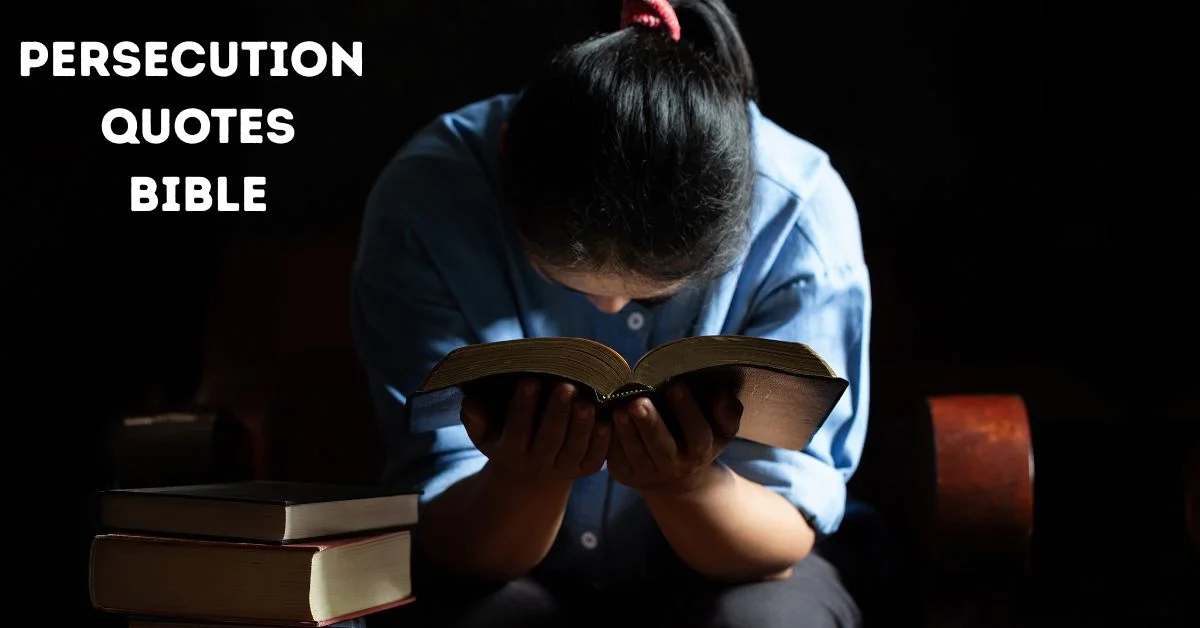
Let’s be honest if you are searching for Persecution quotes bible from the Bible right now, something is probably weighing on you. Maybe someone at work is making things hard because of your faith. Maybe your own family gives you a hard time at the dinner table. Or maybe you are just tired of feeling like the odd one out everywhere you go. I have been in seasons like that, and the one thing that kept pulling me back was realizing the Bible does not just acknowledge this kind of pain it speaks directly into it. This article collects the most meaningful Bible verses about persecution, groups them by the situation you are actually in, and explains what each one means for your real daily life.
What Does the Bible Say About Persecution?
The Bible treats persecution as something believers should expect, not fear. It shows up as criticism, social exclusion, injustice, or physical harm for your faith. Rather than promising escape from it, Scripture consistently points to endurance, trust in God, and love toward those who cause harm.
Here is the thing persecution in the Bible is not limited to physical danger. Being ridiculed for your beliefs, pushed out of a community, or treated unfairly because of your faith all count. Jesus predicted it, the apostles lived it, and the early church survived it. That gives you a completely different starting point. Instead of asking “why is this happening to me,” you can start asking “how does God want me to walk through this?”
You might be wondering why persecution shows up so often throughout Scripture. The honest answer is that there is a natural tension between living by kingdom values and living like the rest of the world. When someone genuinely pursues honesty, patience, and devotion to God, it creates friction with people living differently. That friction does not mean something has gone wrong. More often, it means something is going right.
Read also: 100+ Quotes About Focus That Actually Help You Stay On Track
Bible Verses About Persecution Organized by Real-Life Situations
Instead of a flat list, these verses are grouped by what you are actually going through. Find your situation and read what the Bible says about it directly.
When You Feel Afraid or Anxious
Fear during persecution is completely normal. The Bible does not shame you for feeling it. I spent a long time thinking I was supposed to just push past fear automatically, but these verses showed me it does not work that way. They are for the moments when anxiety takes over and you honestly are not sure if you can keep going.
Matthew 10:28 “Do not be afraid of those who kill the body but cannot kill the soul. Rather, be afraid of the One who can destroy both soul and body in hell.”
Jesus is telling his disciples to recalibrate their fear. The worst anyone can do to you physically is still limited. Only God holds ultimate authority over your life and eternity.
How to apply it: When fear of what people might say or do feels overwhelming, remind yourself that their power has a ceiling. God’s care does not.
Isaiah 41:10 “So do not fear, for I am with you; do not be dismayed, for I am your God. I will strengthen you and help you; I will uphold you with my righteous right hand.”
God is not asking you to manufacture courage on your own. He promises to be the one holding you up. Your job is to lean into that, not to somehow become fearless through willpower alone.
How to apply it: Read this slowly when anxiety spikes. Say it out loud if that helps. This verse works best as a prayer, not just a quote sitting on a screen.
Psalm 27:1 “The Lord is my light and my salvation whom shall I fear? The Lord is the stronghold of my life — of whom shall I be afraid?”
This is David, someone who faced real physical danger and betrayal from people close to him. His confidence did not come from his circumstances being safe. It came from knowing where his ultimate security was anchored.
When You Are Rejected or Mocked
Being mocked for your faith at work, at a family table, or in a social circle is one of the most common forms of persecution people face today. It stings differently because it often comes from people you actually care about.
Matthew 5:11–12 “Blessed are you when people insult you, persecute you and falsely say all kinds of evil against you because of me. Rejoice and be glad, because great is your reward in heaven, for in the same way they persecuted the prophets who were before you.”
Jesus does something unexpected here. He calls insults and mockery a blessing. Not because the pain is good, but because it places you in good company and points to something genuine in your faith.
How to apply it: If coworkers or family members mock your faith, this verse reframes the whole story. You are not a failure. You are walking the same road as every prophet and apostle before you.
1 Peter 4:14 “If you are insulted because of the name of Christ, you are blessed, for the Spirit of glory and of God rests on you.”
Peter wrote this to people experiencing real social hostility. His point is that the insult itself is a marker of God’s presence, not his absence. The Spirit rests on you precisely in those difficult moments, not despite them.
John 15:18–19 “If the world hates you, keep in mind that it hated me first. If you belonged to the world, it would love you as its own.”
Jesus removes the sting of rejection by explaining it plainly. Rejection is not random. It is a natural response to values that are genuinely different. If you fully conformed to everything around you, the friction would disappear but so would your witness.
When Facing Injustice or Oppression
Sometimes persecution is not personal insults. It is structural injustice. You are passed over, falsely accused, or treated unfairly with no clear way to push back. These verses speak directly to that kind of pain.
Romans 12:19 “Do not take revenge, my dear friends, but leave room for God’s wrath, for it is written: It is mine to avenge; I will repay, says the Lord.”
God sees every injustice that has been done to you. You do not have to carry the weight of making things right by yourself. That is not passivity. It is trust that justice will come from a far more reliable source than anything you could arrange.
How to apply it: If you are sitting with real anger about something deeply unfair, this verse is not telling you the anger is wrong. It is telling you where to put it. Hand it over rather than let it hollow you out.
Psalm 37:6 “He will make your righteous reward shine like the dawn, your vindication like the noonday sun.”
Vindication may not come today or even this year. But this psalm was written by someone who lived long enough to watch God act. The promise is that what is true about you will eventually come to light.
Micah 7:7 “But as for me, I watch in hope for the Lord, I wait for God my Savior; my God will hear me.”
Micah wrote this during a period of national collapse and deep injustice. His response was not denial or despair but active, expectant waiting. That combination of patience and hope is one of the hardest postures to hold — and one of the most powerful.
When You Feel Like Giving Up
Sustained pressure wears people down. If you are exhausted and honestly wondering whether staying faithful is even worth it, these verses were written for exactly that season.
Galatians 6:9 “Let us not become weary in doing good, for at the proper time we will reap a harvest if we do not give up.”
Paul acknowledges that weariness in doing good is real. He does not pretend it is easy. He just invites you to look further down the road than you can currently see from where you are standing.
How to apply it: When you feel like your faithfulness is producing absolutely nothing, this is the verse to come back to. The harvest timing is not yours to control. Your job is to keep sowing.
James 1:2–4 “Consider it pure joy, my brothers and sisters, whenever you face trials of many kinds, because you know that the testing of your faith produces perseverance. Let perseverance finish its work so that you may be mature and complete, not lacking anything.”
James is not saying trials feel joyful. He is saying when you zoom out far enough, you can see that endurance builds something in you that cannot be built any other way. The suffering has a yield.
Romans 5:3–4 “We also glory in our sufferings, because we know that suffering produces perseverance; perseverance, character; and character, hope.”
Paul maps out a chain reaction from suffering all the way to hope. Each step leads to something more solid than what came before. This is not a feel-good line. It is a description of how real transformation actually works.
When Dealing with Enemies
What do you actually do with the person who is making your life difficult? The Bible’s answer is surprising and honestly countercultural, but it is deeply practical once you understand why it works.
Matthew 5:44 “But I tell you, love your enemies and pray for those who persecute you.”
This is probably the hardest instruction in the entire New Testament. Jesus is not saying pretend the harm did not happen. He is saying that choosing love and prayer for someone who hurt you breaks the cycle of retaliation and frees you from bitterness that would otherwise eat you alive.
How to apply it: Start small. You do not have to feel warm toward someone who hurt you. Just pray for them once today. That single act starts to shift something inside you, even before your circumstances change.
Romans 12:20 “If your enemy is hungry, feed him; if he is thirsty, give him something to drink. In doing this, you will heap burning coals on his head.”
The burning coals imagery here is actually about shaming someone into repentance through unexpected kindness. Active goodness toward an enemy is not weakness. It is one of the most disarming forces you have access to.
Teachings of Jesus on Persecution
Jesus did not tiptoe around this subject at all. He told his followers directly that opposition would come, and he gave specific instructions for how to handle it.
The Beatitudes in Matthew 5 are the clearest summary. Jesus calls those who are persecuted for righteousness “blessed” and promises the kingdom of heaven belongs to them. He extends this to insults, slander, and false accusations made because of him. His instruction is not to retaliate or withdraw, but to rejoice and continue.
In Luke 21:12–19, Jesus describes a future where his followers will be handed over to authorities and betrayed even by family members. His counsel is not to prepare a legal defense in advance, but to trust that he will give them the words when they actually need them. “By standing firm you will gain life” is how he closes that passage.
What Jesus consistently expects is not that believers will escape opposition, but that they will respond to it in a way that reflects his character. Patience, forgiveness, continued love, and confidence in God’s authority are the recurring themes throughout everything he taught. He modeled all of it himself on the way to the cross.
How the Early Christians Handled Persecution
The early church had no legal protections, no political influence, and no comfortable circumstances. Yet they grew rapidly under intense pressure. Their example gives real, practical shape to everything the verses above are saying.
In Acts 5, Peter and the apostles are arrested and flogged for preaching in Jerusalem. Their response after being released is striking. They left rejoicing because they had been counted worthy of suffering disgrace for the Name, and immediately went back to preaching. They did not retreat or become bitter about what happened.
Stephen, in Acts 7, faced a mob that stoned him to death. His final words were a prayer for the people killing him, mirroring Jesus on the cross almost exactly. His death was witnessed by a young man named Saul, and that moment planted a seed that would later become the apostle Paul. One man’s suffering became the catalyst for the most prolific missionary in history.
Paul himself wrote most of the New Testament from prison or while on the run. His letters are full of joy, not complaint. Philippians 4:11 — “I have learned, in whatever state I am, to be content” — was written while he was under Roman custody. The word “learned” matters. Contentment in suffering is not automatic. It is cultivated through practice, prayer, and a deliberate shift in perspective.
The lesson from the early church is that persecution, handled well, becomes testimony. What looks like a setback often becomes the very thing that spreads faith further than it ever would have gone otherwise.
How to Apply These Bible Verses in Daily Life
Having the right verse matters less than knowing what to actually do with it in a real moment. Here is a simple framework that works.
When something difficult happens, before you react, pause and identify what you are genuinely feeling. Fear? Anger? Exhaustion? Shame? Then find the section of verses above that matches that emotion. Reading a verse about endurance when you are paralyzed by fear might not land as directly as one written for exactly that kind of fear.
Once you have the verse, do not just read it pray it back to God in your own words. Something like “God, you say you will uphold me with your righteous right hand. I need that right now. I do not feel it yet, but I am choosing to trust it.” That kind of honest, specific prayer does far more than passive reading ever will.
If someone is actively persecuting you and you need to respond, try one practical test before speaking or acting. Ask yourself whether your response looks like Jesus or like retaliation. That single question cuts through a lot of noise in heated moments.
Finally, do not walk through persecution alone. The early church was a community, not a collection of isolated individuals. Sharing your situation with someone you trust is not weakness. It reflects exactly how the body of Christ was designed to function.
What Most People Get Wrong About Persecution Verses
Most people come to these verses looking for comfort that the situation will end soon. But that is not what the majority of them actually promise. They promise that God is present, that endurance builds something real, and that justice ultimately belongs to him.
When you approach these verses looking for a quick exit, you often miss the deeper invitation — to be transformed by the experience rather than simply rescued from it. The Bible’s answer to suffering is rarely “get out of it fast.” It is almost always “go through it well.” That shift in expectation changes everything about how you read these passages and how you actually walk through the season you are in.
Common Misunderstandings About Persecution
Two questions come up almost every time this topic is discussed, and both deserve a direct answer.
The first is whether genuine faith removes suffering. Based on Scripture, the answer is no. Jesus, Paul, Peter, and virtually every major figure in the New Testament suffered significantly for their faith. The promise is not immunity from hardship. The promise is presence, strength, and purpose within it.
The second question is whether every difficult experience counts as persecution. Not quite. If someone criticizes you for something genuinely wrong that you did, that is accountability, not persecution. Persecution specifically involves being treated unjustly or harshly because of your sincere faith and your genuine effort to live by it. That distinction matters because it keeps the concept honest, rather than turning every inconvenience into spiritual suffering.
Conclusion
Look, persecution quotes from the Bible are not decorative words for a hard day. They are battle-tested wisdom from people who lost everything and still came out holding something unshakeable. Whatever you are walking through right now, you are not the first, and you are not alone in it. Pick the verse in this list that fits where you actually are today, not where you think you should be. Sit with it, pray it, and let it do the slow work it was meant to do. That is enough for right now.
FAQs
What is the most powerful Bible verse about persecution?
Many people point to Romans 8:38–39, where Paul declares that nothing in all creation can separate believers from the love of God. For practical everyday courage, Matthew 10:28 and Isaiah 41:10 are among the most widely used and deeply comforting verses on the subject.
Why does God allow persecution?
The Bible does not give a single answer, but it offers several threads. Persecution tests and deepens faith, produces endurance, and often becomes a platform for testimony. Romans 5:3–4 and James 1:2–4 both describe suffering as something God uses to build character in ways that comfort simply cannot.
How should Christians respond to persecution?
Scripture consistently points to love, prayer for enemies, endurance, and trust in God’s justice. Matthew 5:44, Romans 12:19–20, and 1 Peter 4:14 together form a clear picture. The response is not passive retreat or aggressive retaliation, but active, grounded faithfulness that reflects the character of Christ.
Does the Bible promise protection from persecution?
Not in the sense that believers will avoid it. The promises are about God’s presence within suffering, ultimate justice, and the eternal weight of what endurance produces. Jesus told his disciples to expect opposition, not escape it. The protection the Bible promises is not always physical. It is spiritual and eternal.
Can persecution strengthen faith?
According to James 1 and Romans 5, yes when walked through with trust in God. Persecution forces a kind of simplification. What is superficial often falls away, and what remains becomes more genuine. Many believers throughout history have described their faith becoming most real during their hardest seasons, not their easiest ones.

Let’s be honest staying focused feels like a superpower these days. Between the constant ping of notifications, half-finished projects, and the endless scroll pulling you back in, your brain barely gets a moment of peace. I put together this collection of quotes about focus specifically for people who are tired of generic lists that just dump words on a screen with no real help. Here, every quote is matched to the actual problem you might be facing whether that’s procrastination, phone addiction, burnout, or just running out of steam halfway through something important. And yes, we’ll also talk about how to actually use these quotes in real life.
Why Focus Is So Hard Today
Quotes about focus become meaningful when you understand why staying focused feels almost impossible these days.
The average person picks up their phone over 100 times a day. Social media apps are literally designed to break your concentration and pull you back into a scroll loop. Multitasking which most people think makes them more productive actually reduces the quality of work because your brain simply cannot split attention effectively between demanding tasks at the same time.
Here’s the thing most productivity articles skip right over: motivation alone will not fix a focus problem. You can feel genuinely inspired for twenty minutes after reading something powerful, and then find yourself back on YouTube before you even realize it. Real focus requires structure, a decent environment, and sometimes just the right words at exactly the right moment to snap you back.
I spent a long time just collecting quotes without ever really using them and nothing changed. This list is built differently.
Quotes About Focus for Beating Distractions
Quotes for Avoiding Social Media Distractions
Social media does not steal hours. It steals minutes, repeatedly, until hours are gone. These quotes name that problem directly.
“The successful warrior is the average man, with laser-like focus.” Bruce Lee
Takeaway: You do not need extraordinary talent. You need uncommon attention. Next time you feel the urge to check your phone, ask yourself whether a warrior would put their energy there.
“Concentrate all your thoughts upon the work in hand. The sun’s rays do not burn until brought to a focus.” Alexander Graham Bell
Takeaway: Scattered energy produces no heat. Even a small amount of focused effort creates real results. Before opening a new tab, finish the one task you already started.
“You will never reach your destination if you stop and throw stones at every dog that barks.” Winston Churchill
Takeaway: Every notification is a barking dog. You do not have to respond to all of them. Silence the noise and keep moving.
“Where focus goes, energy flows.” Tony Robbins
Takeaway: Whatever you look at grows in your mind. Stop staring at distractions and start staring at your goal.
“Distraction is the enemy of vision.” T.D. Jakes
Takeaway: If you do not know where you are going, any distraction looks like a road. Get clear on your goal first, and then protect it hard.
Read more: Athletics Motivational Quotes That Actually Push You Further
Quotes for Staying Mentally Sharp
When your mind starts wandering mid-task, these lines help pull it right back.
“The ability to focus attention on important things is a defining characteristic of intelligence.” Robert J. Shiller
Takeaway: Intelligence is not just about knowing things. It is about choosing what deserves your mental energy. Start treating attention like a limited resource, because it is.
“To do two things at once is to do neither.” Publilius Syrus
Takeaway: Every time you multitask, you are actually doing two things poorly. Close the extra tabs. One thing at a time, always.
“Your focus determines your reality.” Qui-Gon Jinn, Star Wars
Takeaway: What you consistently give your attention to shapes what feels real and possible to you. So choose wisely.
“Most people have no idea of the giant capacity we can immediately command when we focus all of our resources on mastering a single area of our lives.” Tony Robbins
Takeaway: If you feel stuck, it is usually because your effort is spread too thin. Narrow your focus. Single area. Full effort. See what happens.
Quotes About Focus for Work and Productivity
Quotes for Deep Work
Deep work means putting your full mental power into something that actually matters. These quotes are for those moments right before you sit down to do serious, important work.
“The shorter way to do many things is to only do one thing at a time.” Mozart
Takeaway: Serial focus beats parallel distraction every single time. Block off one task. Go all in. Do not split yourself.
“I fear not the man who has practiced 10,000 kicks once, but I fear the man who has practiced one kick 10,000 times.” Bruce Lee
Takeaway: Depth beats breadth. The person who keeps going deeper on one skill will always outperform the one who keeps dabbling in ten different things.
“It is not enough to be busy; so too are the ants. The question is: what are we busy about?” Henry David Thoreau
Takeaway: Busyness and productivity are not the same thing. Before you open your task list, ask yourself whether you are actually working on the right thing.
“The man who chases two rabbits catches neither.” Confucius
Takeaway: Pick the most important project and stay with it. You cannot chase two big goals with equal energy and catch both. It just does not work that way.
“Clarity about what matters provides clarity about what does not.” Cal Newport
Takeaway: When you know exactly what you are trying to accomplish today, everything else automatically becomes noise you can ignore.
Quotes for Finishing What You Start
You might be wondering why starting feels easy but finishing feels brutal. Starting is exciting finishing is where the real character shows up. These quotes are for the messy middle part, when the work feels hard and the end still seems far away.
“It always seems impossible until it’s done.” Nelson Mandela
Takeaway: Every hard task looks impossible from the middle. The only way out is through. Just ship it.
“Energy and persistence conquer all things.” Benjamin Franklin
Takeaway: Talent gets you started. Persistence gets you across the finish line. Show up again tomorrow, even if today felt rough.
“A little progress each day adds up to big results.” Satya Nadellas (paraphrased wisdom)
Takeaway: Finishing 1% of a project today and 1% more tomorrow means something complete in 100 working sessions. Small daily progress is not slow it is reliable.
“The secret of getting ahead is getting started.” Mark Twain
Takeaway: If you are stuck mid-project, pretend you are just starting again. Forget the resistance. Just write the next line or take the very next step.
Quotes About Focus for Students and Studying
Quotes for Exam Preparation
Exam season brings its own kind of mental fog. These quotes are direct and sharp enough to cut through it.
“Success is the sum of small efforts repeated day in and day out.” Robert Collier
Takeaway: Your exam performance is built in ordinary study sessions, not the night before. Every single small session counts more than you think.
“The more that you read, the more things you will know.” Dr. Seuss
Takeaway: Studying is not a punishment. Every page you read is adding something real to your mind and that compounds over time.
“Don’t watch the clock; do what it does. Keep going.” Sam Levenson
Takeaway: When you catch yourself staring at the clock during a study session, redirect that gaze back to your material. The time passes either way.
“Study hard what interests you the most in the most undisciplined, irreverent and original manner possible.” Richard Feynman
Takeaway: Find an angle on the subject that genuinely interests you. Curiosity is the best fuel for long study sessions, and no one can give you that you have to find it yourself.
“The expert in anything was once a beginner.” Helen Hayes
Takeaway: If the content feels hard and you feel lost, that is completely normal. Everyone you admire started at zero. Keep going.
Quotes for Staying Consistent
The biggest challenge in studying is not one hard session. It is showing up every day, especially when you do not feel like it at all.
“We are what we repeatedly do. Excellence, then, is not an act, but a habit.” Aristotle
Takeaway: Studying once before an exam is an act. Studying a little every day is a habit. Habits produce excellence, and acts do not.
“Discipline is choosing between what you want now and what you want most.” Augusta F. Kantra
Takeaway: That feeling of wanting to stop and watch something instead of studying? That is the exact moment your future is being quietly decided.
“Success doesn’t come from what you do occasionally. It comes from what you do consistently.” Marie Forleo
Takeaway: Occasional marathon study sessions matter less than brief daily ones. Fifteen minutes every day beats three hours once a week, every time.
Quotes About Focus and Discipline
Quotes About Consistency Over Motivation
Motivation comes and goes like weather. These quotes speak to the thing that stays even when motivation disappears completely.
“Motivation gets you going. Discipline keeps you growing.” John C. Maxwell
Takeaway: You will not always feel like doing the work. Discipline is simply the decision to do it anyway, feeling or no feeling.
“The difference between a successful person and others is not a lack of strength, not a lack of knowledge, but rather a lack of will.” Vince Lombardi
Takeaway: Everything you need is probably already inside you. The missing piece is just showing up when you really do not want to.
“Talent is cheaper than table salt. What separates the talented individual from the successful one is a lot of hard work.” Stephen King
Takeaway: Your competition is not more talented. They are more consistent. And consistency is something you can choose starting right now.
“It’s not about perfect. It’s about effort. And when you bring that effort every single day, that’s where transformation happens.” Jillian Michaels
Takeaway: Stop waiting until conditions feel right. Imperfect effort, applied consistently, creates more results than waiting around for perfect motivation that may never come.
Quotes About Self-Control
Self-control and focus are inseparable. You simply cannot hold attention without managing your own impulses first.
“He who controls others may be powerful, but he who has mastered himself is mightier still.” Lao Tzu
Takeaway: Real power is internal. Controlling your urge to check notifications or give up is harder than controlling other people and far more valuable in the long run.
“One can have no smaller or greater mastery than mastery of oneself.” Leonardo da Vinci
Takeaway: If you want to build something great, start by building control over your own impulses. That is where it all begins.
“The first and greatest victory is to conquer yourself.” Plato
Takeaway: Every time you choose to stay focused when distraction calls, you are winning a battle that most people quietly lose without even noticing.
Short Focus Quotes (Quick Motivation)
Sometimes you just need something fast and punchy. These are easy to remember and easy to share.
“Focus on the journey, not the destination.” Greg Anderson
“Where attention goes, energy flows.” — James Redfield
“One thing at a time.” Samuel Smiles
“Stay focused, go after your dreams, and keep moving toward your goals.” LL Cool J
“The key to success is to focus our conscious mind on things we desire, not things we fear.” — Brian Tracy
“Do one thing every day that scares you.” Eleanor Roosevelt
“Focus is more valuable than intelligence.” Unknown
“Chase the vision, not the money.” Tony Hsieh
“Small steps every day.” Unknown
“Win the morning, win the day.” Tim Ferriss
Famous Quotes About Focus
These come from people who built extraordinary things by directing their attention in extraordinary ways.
“The successful people are the ones who can hold their focus for long periods.” Thomas Edison
“My success, part of it certainly, is that I have focused in on a few things.” Bill Gates
“You have to learn to say no to lots of good opportunities, so you can focus on what really matters.” Steve Jobs
“Focusing is about saying no.” Steve Jobs
“It is during our darkest moments that we must focus to see the light.” Aristotle Onassis
“The art of being wise is knowing what to overlook.” William James
“I have a one-track mind. I can only focus on one thing at a time.” Albert Einstein
“Give whatever you are doing and whoever you are with the gift of your attention.” Jim Rohn
“A man is what he thinks about all day long.” Ralph Waldo Emerson
“The most important thing is being able to think for yourself.” Warren Buffett
How to Actually Use Focus Quotes in Daily Life
Reading a quote and feeling inspired is one thing. Building that inspiration into your daily structure is something else entirely. Here is how to actually make it work.
Turn Quotes into Daily Reminders
Pick one quote per week not ten. Write it on a sticky note and put it somewhere you look constantly, like your laptop screen, bathroom mirror, or phone wallpaper. Repeated exposure to one sentence builds its meaning into your thinking over time. Variety is honestly overrated here. Consistency is what makes a quote actually land in your brain and stay there.
If you keep a journal, write the week’s quote at the top of each entry. Before you write about your day, you are forced to read it again. That small repetition adds up more than you’d expect.
Use Quotes to Reset Your Mind During Distractions
Here is something practical that actually works: choose one short quote specifically for the moment you catch yourself distracted. Something sharp like “to do two things at once is to do neither.” When you notice you have gone off track, reading that line becomes your signal to close the tab and return.
This works because it creates a small ritual around refocusing. Instead of feeling guilty about the distraction, you have a clear action to take read the line, exhale, return to work. That is a much cleaner loop than the shame spiral that usually follows a distracted stretch.
Create a Focus Routine Using Quotes
Some people start their work block with a quick quote-reading moment, almost like a mental warm-up. You sit down, read two or three quotes that resonate with what you are about to do, and then begin. It signals to your brain that something focused is happening. Think of it like stretching before a run it does not take long, but it makes a difference.
You can also pair quotes with a specific daily trigger, like making your morning coffee. Every time the coffee brews, you read one quote. Over time, the coffee itself starts to feel like a cue to get focused. That kind of habit-stacking is simple but genuinely effective.
What Most People Get Wrong About Focus Quotes
Most people treat quotes like vitamins. They read them, feel a brief boost, and expect that boost to carry them through the day. That is not how this works.
A quote is a pattern interrupt. It is a piece of language designed to snap you out of autopilot for a second. But that second still requires action from you. Reading “focus on the journey, not the destination” does nothing if you close the tab and go right back to scrolling. The quote’s job is to open a window. Your job is to step through it.
The second mistake is reading too many quotes at once. Scrolling through fifty motivational lines feels productive but it is actually a way to avoid the real work. If you read more than five quotes before sitting down to do something, you are procrastinating with extra steps.
One quote, used with real intention, is worth more than fifty read passively.
Conclusion
Here is the honest truth about quotes about focus: the flashiest ones are rarely the most useful. The best ones are the ones that name exactly what you are struggling with, at exactly the right moment. So go back through this list, save two or three that actually hit home for you personally, and use them as a reset button when you feel yourself drifting. The goal was never to feel focused. The goal is to do the thing. Quotes can open the door but you still have to be the one who walks through it. Now close this tab and go do the work.
FAQs
Do motivational quotes really help focus?
They can, but only when used with intention. A quote by itself does not create focus. What it can do is interrupt a distracted thought pattern and give you a concrete reminder of what actually matters. The key is choosing one that feels personally relevant to you, not just generally inspiring to someone somewhere.
How many quotes should I read daily?
One or two is genuinely enough. Reading more than that before starting work is often a form of productive procrastination. Pick one quote that fits your current struggle, sit with it for a moment, and then get to work.
What is the best quote for staying focused?
That depends on the specific problem you are facing. For distraction, Bruce Lee’s “laser-like focus” quote hits hard. For discipline, the Aristotle quote about habits is difficult to beat. For students, Collier’s line about small daily efforts is probably the most grounded and practical. Match the quote to the struggle, not the other way around.
Can quotes improve productivity long-term?
Only if they are paired with real habits. A quote can remind you of a value, but that value has to be backed by a system. If you use quotes to reinforce a routine you are already building, they become powerful anchors. If you use them as a substitute for action, they just become noise.
Why do I feel motivated after reading quotes but lose focus quickly?
Because motivation is emotional and short-lived. What you felt after reading that quote was real but fleeting. Focus requires structure, not just feeling. Use that motivational spike to set up your workspace, close distracting apps, and define exactly what you will do next. Let the emotion build the environment. Then let the environment carry you forward.
Honestly, some words just refuse to age. I was putting together material for a presentation once, and I spent way too long scrolling through generic quote lists that felt copy-pasted and empty. No context, no explanation, just a wall of text. If you have been there, you know how frustrating that is. These quotes about race discrimination deserve better than that. So I pulled together the ones that actually mean something, sorted them by how you would actually use them, and gave each one the context it deserves.
Powerful Quotes About Race Discrimination
The most powerful quotes about race discrimination are not the ones that sound good on a poster. They are the ones that come from people who had everything to lose and still spoke anyway. These words carry real history behind them.
“Racism is still with us. But it is up to us to prepare our children for what they have to meet, and, hopefully, we shall overcome.” Rosa Parks said this, and what makes it hit is her honesty. She did not sugarcoat it. She did not say racism is almost gone. She said it is still here, now figure out what to do.
Short and Impactful Quotes
Let’s be honest, sometimes a short line lands harder than a five-paragraph argument.
“I have a dream that my four little children will one day live in a nation where they will not be judged by the color of their skin but by the content of their character.” Martin Luther King Jr. said this in 1963, and people still share it because it describes something that has not fully arrived yet.
“Darkness cannot drive out darkness; only light can do that. Hate cannot drive out hate; only love can do that.” Also from King, and probably his most shared line on fighting racism without becoming what you fight against.
“You don’t have to be poor to be discriminated against.” This one cuts through a myth a lot of people still believe, that racism is only about money or class.
“The most common way people give up their power is by thinking they don’t have any.” Alice Walker said this, and it speaks directly to people who feel like nothing they do will change anything.
“In a racist society, it is not enough to be non-racist. We must be anti-racist.” Angela Davis said this, and it completely changed how a lot of people think about their responsibility.
Read also: Quotes about Perfection That Actually Make You Think
Deep and Thought-Provoking Quotes
These ones ask more of you. They are not feel-good lines. They sit with you.
“Not everything that is faced can be changed, but nothing can be changed until it is faced.” James Baldwin wrote this, and it still stings because so many people still choose not to look.
“To be a Negro in this country and to be relatively conscious is to be in a state of rage almost, almost all of the time.” Baldwin again, writing from lived experience about what navigating racism actually feels like day to day.
“Prejudice is a burden that confuses the past, threatens the future, and renders the present inaccessible.” Maya Angelou connected discrimination to time itself, and that framing is something I have never seen another writer do quite the same way.
Quotes from Famous Leaders and Activists
Civil Rights Leaders
Here’s the thing most people forget: these quotes were not written for social media. They came out of marches, courtrooms, and prison cells. The stakes were completely different.
“Injustice anywhere is a threat to justice everywhere.” King wrote this in his Letter from Birmingham Jail in 1963. He was not speaking to a crowd. He was responding to fellow clergymen who told him to slow down and wait. Knowing that, the line means something more.
“I am not free while any woman is unfree, even when her shackles are very different from my own.” Audre Lorde said this, and it connects racial discrimination to gender in a way that was ahead of its time.
“One has not only a legal but a moral responsibility to obey just laws. Conversely, one has a moral responsibility to disobey unjust laws.” King again, from the same letter, making one of the clearest cases for civil disobedience ever written.
“The time is always right to do what is right.” Short, yes. But this one answers the most common excuse people use for not acting.
Modern Voices on Racism
You might be wondering why modern quotes matter when we have so many powerful historical ones. Here is why: older quotes described separate water fountains. Modern ones describe algorithmic bias, racial wealth gaps, and the prison pipeline. Same problem, different shape.
“Racism is not getting worse, it’s getting filmed.” Van Jones said this, and it shifted how people understood why racial incidents seemed to be suddenly everywhere in the news. They were not new. They were just finally visible.
“When you’re accustomed to privilege, equality feels like oppression.” No single author owns this line, but it became one of the most shared quotes for explaining white privilege without sounding like a lecture.
“Being anti-racist is a practice, not an identity.” Ibram X. Kendi gave people a way to understand this as ongoing work, not a title you earn once and keep forever.
“Silence is complicity.” Four words. Used heavily during the 2020 racial justice movement. It pushed people to understand that staying quiet is still a choice.
“I’m tired of being excellent.” This one gained real momentum when Black professionals started speaking openly about being expected to outperform everyone just to be taken seriously. It says exhaustion and injustice in five words.
Quotes About Equality and Justice
Equality-Focused Quotes
“All men are created equal.” Thomas Jefferson put this in the Declaration of Independence while enslaved people had zero legal rights. Civil rights leaders pointed to that gap for generations, and it is still pointed to today.
“No one is born hating another person because of the color of his skin, or his background, or his religion. People must learn to hate, and if they can learn to hate, they can be taught to love.” Nelson Mandela said this after spending 27 years in prison. That context makes it remarkable in a way no other quote quite matches.
“Until the lion learns to write, every story will glorify the hunter.” This African proverb keeps showing up in discussions about whose history gets taught and whose gets erased. It fits perfectly in conversations about race discrimination in education and media.
Justice and Human Rights Quotes
“The arc of the moral universe is long, but it bends toward justice.” Originally from Theodore Parker, made famous by King. People reach for it in hard moments to remember that change, even slow change, is still moving somewhere.
“Where justice is denied, where poverty is enforced, where ignorance prevails, and where any one class is made to feel that society is an organized conspiracy to oppress, rob, and degrade them, neither persons nor property will be safe.” Frederick Douglass wrote this in 1886. It describes, almost exactly, what happens when racial discrimination goes unaddressed for long enough.
“Human rights are not a privilege conferred by government. They are every human being’s entitlement by virtue of his humanity.” Mother Teresa said this, and it gets used often in human rights work that crosses racial lines.
Quotes About Overcoming Race Discrimination
Hopeful and Inspirational Quotes
“We must learn to live together as brothers or perish together as fools.” King said this in 1964, and it carries an urgency that most polite conversations about race still avoid.
“I had to make my own living and my own opportunity. But I made it! Don’t sit down and wait for the opportunities to come. Get up and make them.” Madam C.J. Walker built a business empire as a Black woman in the early 1900s. She was not sitting around waiting for the world to become fair.
“I am not going to sit at your table and watch you eat, with nothing on my plate, and call myself a diner.” Langston Hughes wrote this as a metaphor, and it is one of the clearest descriptions of the difference between being present in a room and actually being included.
“I’ve learned that people will forget what you said, people will forget what you did, but people will never forget how you made them feel.” Maya Angelou said this, and it hits particularly hard in conversations about race because the emotional damage from discrimination stays long after the specific incidents fade.
Strength and Resistance Quotes
“We know through painful experience that freedom is never voluntarily given by the oppressor; it must be demanded by the oppressed.” King, Letter from Birmingham Jail. One of the most direct statements ever written about why waiting for fairness never works.
“I am deliberate and afraid of nothing.” Audre Lorde. Four words that became a quiet battle cry for people trying to exist in spaces that were not designed for them.
“You have to act as if it were possible to radically transform the world. And you have to do it all the time.” Angela Davis said this, and it is genuinely useful because it makes action the starting point, not certainty.
“The most disrespected person in America is the Black woman.” Malcolm X said this in 1962. People still quote it because that disrespect has not entirely gone away.
Use-Case Based Quotes
Quotes for Essays and School Assignments
If you are writing about race discrimination for school, you need quotes that are grounded in history and make an argument, not just sound meaningful.
For a history essay, “Racism is an institution with a history of over 500 years” sets up a structural argument right away. It shifts the frame from individual behavior to a system.
For an English essay on injustice, King’s line “Injustice anywhere is a threat to justice everywhere” works as both an opening hook and a strong closing thought because it connects a local problem to something universal.
For a sociology or civil rights paper, Baldwin’s “Not everything that is faced can be changed, but nothing can be changed until it is faced” is ideal when you are arguing that awareness is where real change begins.
For a debate on modern racism, Van Jones’s line “Racism is not getting worse, it’s getting filmed” shifts the argument from whether racism increased to whether it became more documented. That is a genuinely different and stronger point.
Quotes for Speeches and Presentations
Short, rhythmic lines land best with a live audience. Open strong or close strong, and give the quote a moment to breathe before you move on.
To open a speech, “We know through painful experience that freedom is never voluntarily given by the oppressor; it must be demanded by the oppressed” creates instant urgency. Let it sit for a second before you say another word.
To build toward a key point mid-speech, “The arc of the moral universe is long, but it bends toward justice” gives your audience a reason to believe that what you are asking them to do matters.
To close a speech, “The time is always right to do what is right” sends people out with something they can actually act on.
For awareness presentations specifically, “In a racist society, it is not enough to be non-racist. We must be anti-racist” sets the tone before you even get into your data.
Quotes for Social Media Captions
Social media does not give you much space, so pick quotes that work on their own without needing three paragraphs of explanation.
For a bold statement post, “Silence is complicity” does everything you need in three words.
For something reflective or educational, “People must learn to hate, and if they can learn to hate, they can be taught to love” pairs well with a real news story or personal reflection.
For a post showing strength or protest imagery, “I am deliberate and afraid of nothing” fits without needing any caption at all.
For Black History Month, “Darkness cannot drive out darkness; only light can do that” is widely recognized and never feels out of place.
For a post about privilege, “When you’re accustomed to privilege, equality feels like oppression” tends to spark real conversation in the comments, which is often the whole point.
Quotes for Awareness Campaigns
“Until the lion learns to write, every story will glorify the hunter” works for campaigns about representation in media or education. It says in one line what a lot of campaign briefs take pages to explain.
“Being anti-racist is a practice, not an identity” from Ibram X. Kendi is useful when your campaign is asking people to do something ongoing, not just share a graphic once and move on.
“Racism is still with us. But it is up to us to prepare our children for what they have to meet” from Rosa Parks works well for campaigns focused on schools, parenting, or the next generation.
“I am not going to sit at your table and watch you eat, with nothing on my plate, and call myself a diner” fits campaigns about economic inclusion or workplace equity.
Understanding the Meaning Behind These Quotes
Why These Quotes Still Matter Today
People sometimes ask why we keep going back to quotes from the 1960s. The honest answer is that the problems they described have not fully disappeared. Racial disparities still exist in housing, education, healthcare, and the legal system. King, Baldwin, and Douglass were describing structures, not just moments, and structures take much longer to change than laws do.
Modern quotes from Kendi, Davis, and Van Jones matter because they update the conversation to match how racism actually looks right now. Both generations of quotes are part of the same story, just different chapters.
How Quotes Influence Social Change
A well-placed quote does not just sound good. It changes how someone sees a situation. When Baldwin wrote that nothing can be changed until it is faced, he gave people a reason to stop avoiding hard conversations. That kind of framing actually shifts behavior over time.
Quotes became rally cries because they named what people were experiencing without flinching. When you read one and feel something shift, that is exactly what the quote was supposed to do.
What Most People Get Wrong About These Quotes
The biggest mistake is using these quotes decoratively instead of meaningfully. You see it constantly: a powerful Baldwin line underneath a pretty photo, stripped of all context. Baldwin was not writing for aesthetics. He was describing what it felt like to be a Black man in America when his life was legally worth less.
Using a quote without understanding when and why it was said flattens it. King’s line about the moral arc of the universe gets used to preach patience, but King was not preaching patience at all. He was arguing that justice requires active bending, not passive waiting.
And please, do not treat old quotes as the only valid ones. Kendi, Davis, and Lorde are writing and speaking right now. Their words are grounded in current research, lived experience, and a realistic view of how discrimination operates today. Use them.
Tips for Using Quotes Effectively
How to Choose the Right Quote
Think about what you need the quote to do first. If you want to inform, pick one that explains a concept clearly. If you want to move people to act, pick something with urgency behind it. If you want to challenge an assumption, find something that flips a common idea on its head.
Also match the quote to your audience. Something that lands in a university seminar might feel too heavy for a social media caption. A punchy four-word line that works on Instagram might feel too thin for a research paper.
How to Add Context in Writing
Always introduce a quote before you drop it in. One sentence is usually enough. Say who said it, and if it came from somewhere specific like a prison letter or a congressional speech, mention that. That one sentence turns a floating quote into actual evidence.
After the quote, explain it in your own words and connect it to your argument. The quote should support what you are saying, not do all the talking for you.
Conclusion
Here is what I want to leave you with. These quotes about race discrimination are not just words to copy and paste. They were said by real people in real moments, often at great personal cost. When you use them, bring the context with you. Share who said it, why it mattered, and what you think it means for the conversation you are in. That is how a quote goes from decoration to something that actually changes a mind. So pick the one that fits, use it with intention, and let it do what it was always meant to do.
FAQs
What are the most famous quotes about race discrimination?
King’s “Injustice anywhere is a threat to justice everywhere,” Baldwin’s “Nothing can be changed until it is faced,” and Davis’s “It is not enough to be non-racist, we must be anti-racist” are among the most recognized. They get quoted so often because they say something true in a way that is very hard to argue against.
Can I use these quotes in essays or speeches?
Yes, absolutely. For essays, cite the source using whatever style your school requires. For speeches, just name the person and the year if you know it. That small bit of attribution is what gives the quote its credibility with an audience.
Are modern quotes as impactful as historical ones?
They can be, and in some cases more so. Historical quotes describe a world that has changed in some ways, even if the core problems remain. Modern quotes from people like Ibram X. Kendi and Van Jones describe racism as it actually operates today, including in systems, data, and technology. For current events and modern arguments, modern quotes often carry more weight.
How do I choose the best quote for my purpose?
Start by being clear about what you want the quote to do. If you need something educational, look for a quote that explains a concept. If you need emotional impact, look for something direct and personal. If you need something that challenges assumptions, look for quotes that flip a common idea on its head, like Van Jones’s line about racism getting filmed rather than worse.
What is the difference between a quote about racism and one about racial discrimination?
Racism refers to beliefs, attitudes, and systems that treat people differently based on race. Racial discrimination is the actual act of treating someone unfairly because of their race. Many quotes address both, because the belief and the action are closely connected. King’s quotes often address both the mindset and the structural practice at the same time.
-
 Quotes1 week ago
Jim Elliot He Is No Fool Quote Meaning & Story
-

 Quotes2 months ago
Commitment to Excellence: Meaning and Examples
-

 Quotes2 months ago
Horsemanship Quotes for Riders and Horse Lovers
-

 Tech6 days ago
Newscod Explained: Features, Benefits, and Worth
-

 Tech1 week ago
Fkstrcghtc: A Complete Guide
-

 Tech6 days ago
Miflow Explained: Software, Studio, and More
-

 Health & Fitness6 days ago
Cryotherapy Cost: What to Expect in 2026
-

 Tech1 week ago
Mywaperu: A Complete Guide for New Users