Quotes
Horsemanship Quotes for Riders and Horse Lovers

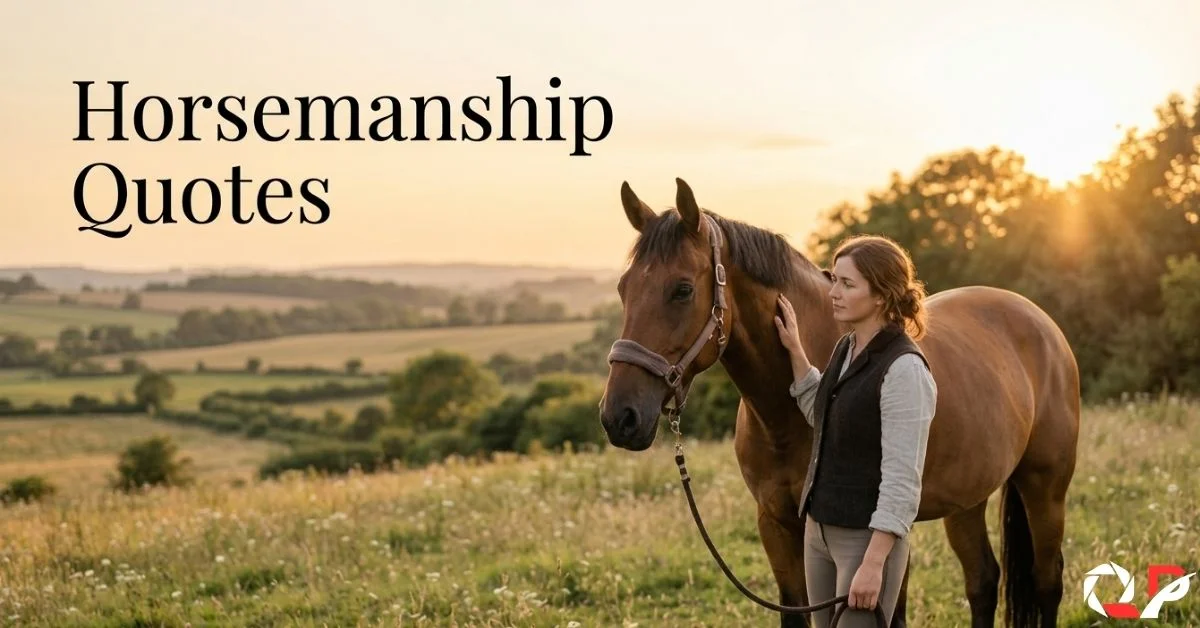
Few things capture the spirit of riding quite like horsemanship quotes. They put big emotions into simple words and help riders express what trust, patience, courage, and partnership really feel like in the saddle. Whether you are looking for motivation before a ride, meaningful words to share, or quiet wisdom from experienced horsemen and horsewomen, these quotes offer insight that stays with you long after the ride is over.
The bond between a horse and rider is one of the oldest partnerships in human history. It is built on trust, patience, and quiet communication. Because of this deep connection, horsemanship quotes often carry powerful lessons not only about riding but also about life.
From famous trainers and riders to cowboys and poets, many people have tried to describe what it feels like to ride, train, and understand horses. Their words capture courage, patience, respect, and the deep horse-rider bond that makes equestrian life so meaningful.
In this guide, you will find inspirational horsemanship quotes organized into clear themes. Each section reflects an important part of riding, including trust with horses, rider confidence, patience in riding, communication, and the emotional strength behind true equine partnership.
Famous Horsemanship Quotes
These classic quotes are widely shared in the equestrian world. They express the spirit of horsemanship in a few simple words.
- “There is something about the outside of a horse that is good for the inside of a man.” Winston Churchill
- “A horse gallops with his lungs, perseveres with his heart, and wins with his character.” Federico Tesio
- “The horse is a mirror to your soul… sometimes you might not like what you see.” Buck Brannaman
- “No hour of life is wasted that is spent in the saddle.” Winston Churchill
- “A good rider can hear his horse speak to him. A great rider can hear his horse whisper.” Anonymous
Meaning:
These quotes highlight the emotional and mental connection between horse and rider. Horses often reflect the rider’s feelings, patience, leadership, and rider heart.
Horsemanship Quotes about the Horse-Rider Bond
The heart of horsemanship lies in partnership. Riders do not simply control horses. They communicate and cooperate with them.
- “The horse is a partner, not a machine.”
- “When you listen to your horse, your horse will listen to you.”
- “A horse trusts you with his life. That trust must be earned every day.”
- “Riding is not about dominance. It is about harmony.”
- “Your horse does not care how much you know until he knows how much you care.”
What these quotes teach:
True horsemanship is not about force. It is about creating a respectful relationship where both horse and rider feel safe. This is the foundation of equestrian wisdom and equine partnership.
Natural Horsemanship Quotes
Natural horsemanship focuses on understanding horse instincts, behavior, and equine psychology. Many respected trainers emphasize calm communication, timing, and empathy riding.
- “Take the time it takes so it takes less time.” Pat Parelli
- “Horses don’t learn from pressure. They learn from the release.”
- “You cannot teach a horse by shouting at it.”
- “A horse never lies. If something is wrong, listen.”
- “Horsemanship is the art of speaking the horse’s language.”
Why these ideas matter:
Modern horse training tips often focus on reading horse instincts and building trust through calm, clear signals. That is why natural horsemanship remains such an important part of performance horsemanship.
Quotes about Trust With Horses
Trust is the foundation of safe and successful riding. Without trust, even skilled riders can struggle to build a true connection.
- “Trust between horse and rider is built one ride at a time.”
- “A horse gives you his heart if you earn it.”
- “The strongest reins are not leather they are trust.”
- “Your horse feels your confidence before he hears your command.”
- “When trust grows, fear disappears.”
Lesson:
Trust makes riding smoother and safer. Horses are sensitive animals that quickly respond to a rider’s emotions, body language, and mental toughness.
Horsemanship Quotes about Patience
Working with horses teaches patience like few other activities. Progress in riding and training rarely happens in a rush.
- “Patience is the first lesson every horse teaches.”
- “Slow training creates strong horses.”
- “Rushing a horse only slows your progress.”
- “The horse teaches the rider more than the rider teaches the horse.”
- “A calm rider creates a calm horse.”
Patience in riding helps riders build better communication, reduce frustration, and create lasting results.
Quotes about Rider Confidence and Courage
Confidence is essential for both the rider and the horse. A nervous rider can create tension, while a calm rider can inspire trust.
- “Ride the horse you have, not the one you fear.”
- “Confidence travels down the reins.”
- “Your horse believes in you ride like it.”
- “A confident rider gives horse courage.”
- “Courage in the saddle begins in the mind.”
Rider confidence supports better performance horsemanship and helps horses feel secure in uncertain moments.
Cowboy Horse Wisdom and Saddle Sayings
Cowboys spent countless hours riding and working with horses. Their sayings often contain simple but powerful lessons about respect, consistency, and saddle wisdom.
- “A cowboy is only as good as his horse.”
- “Talk to your horse like you would a good friend.”
- “The best horses are made with patience, not spurs.”
- “A horse will work for a rider who respects him.”
- “Good horses make good cowboys.”
These sayings remind riders that respect and care create strong partnerships built on trust and perseverance riding.
Inspirational Quotes for Horse Trainers
Horse trainers often face challenges that require skill, patience, and careful observation. These horsemanship quotes reflect the quiet discipline of good training.
- “Training a horse is a conversation, not a command.”
- “Small progress with horses is still progress.”
- “Every great horse was once a beginner.”
- “The best trainers never stop learning.”
- “Teach the horse, not the trick.”
Good training requires consistency, empathy, and a willingness to keep learning from the horse.
Life Lessons Horses Teach Us
Horses do more than carry riders. They teach powerful lessons that go beyond the arena or trail.
- “Horses teach us patience.”
- “They teach us humility.”
- “They remind us to stay calm in chaos.”
- “They show us how trust must be earned.”
- “They prove that true strength is gentle.”
Because of these lessons, many people say horses are not just animals. They are teachers of character, balance, and equine spirit.
Modern Equestrian Inspiration
Today’s riders continue to share new insights about horsemanship. Competitive disciplines such as dressage, show jumping, and eventing all emphasize rider-horse synergy, respect, and communication.
Modern riders often focus on:
- Horse welfare and health
- Positive training methods
- Understanding equine behavior
- Building mental strength in the saddle
The philosophy of horsemanship continues to evolve while keeping the same core values: trust, patience, partnership, and empathy riding.
Short Horsemanship Quotes for Sharing
These short horsemanship quotes are perfect for captions, journals, tack rooms, and daily motivation.
- “Ride with heart.”
- “Trust the horse.”
- “Feel the rhythm of the hoof beats.”
- “Horse first, rider second.”
- “Let the horse teach you.”
- “Partnership over power.”
- “Soft hands, strong mind.”
- “Ride with courage.”
Why Horsemanship Quotes Inspire Riders
Horsemanship quotes resonate deeply with riders because they describe real experiences in the saddle. They turn complex riding lessons into simple words that stay with you.
They remind riders that:
- Progress takes patience
- Horses respond to emotions
- Trust builds over time
- True riding skill includes kindness and empathy
Many riders keep their favorite quotes in barns, journals, or training spaces as a source of equestrian motivation and daily encouragement.
Conclusion
The best horsemanship quotes do more than sound beautiful. They remind riders that horsemanship is built on trust, patience, empathy, courage, and steady communication. Each quote carries a lesson that applies both in the saddle and in everyday life. Some inspire confidence before a ride, while others encourage calm, respect, and better understanding of the horse. Together, they show that true horsemanship is not about control alone, but about partnership. Whether you ride for sport, pleasure, or personal growth, these words can guide, comfort, and motivate you. In the end, great horsemanship begins with listening, learning, and honoring the bond between horse and rider.
FAQs
What are horsemanship quotes?
Horsemanship quotes are sayings or reflections about riding, horse training, trust, patience, and the bond between horse and rider.
What is a famous horse riding quote?
One famous quote is, “No hour of life is wasted that is spent in the saddle.” Winston Churchill
Who said, “A horse gallops with his lungs”?
That quote is attributed to Federico Tesio.
What is Pat Parelli horsemanship quotes known for?
Pat Parelli quotes are known for emphasizing patience, timing, and understanding the horse’s natural behavior.
Why do riders enjoy horsemanship quotes?
Riders enjoy them because they offer inspiration, emotional connection, and simple lessons about trust, courage, and partnership.
What are the best equestrian motivational quotes?
The best equestrian motivational quotes are the ones that encourage courage, patience, resilience, and trust. Quotes about rider confidence and the horse-rider bond are especially popular.


Okay, real talk. I spent an embarrassing amount of time staring at a half-finished essay once, genuinely unsure whether to put a song lyric in quotes, italics, or just… hope my professor didn’t notice. If you’ve ever felt that same uncertainty, you’re not alone. Quoting song lyrics in writing has its own set of rules, and the format changes depending on whether you’re writing an essay, a paper, or a blog post. Get it wrong and it looks careless. Get it right and your writing feels sharp and credible. This guide walks you through how to quote a song lyric correctly, from formatting to citations, with real examples you can use right away.
FEATURED SNIPPET
To quote a song lyric, place the lyrics in quotation marks inside your sentence and add an in-text citation. For MLA, cite the songwriter’s last name and the song title. For APA, include the songwriter and year. Always italicize the song title, not the lyric itself.
Read also: 150+ Flowers and Quotes to Inspire, Caption, and Share
How to Quote Song Lyrics (Step-by-Step Guide)
Here’s the thing: most people jump straight into formatting without thinking through the basics first. That’s where things go sideways. Follow this process and you’ll avoid the most common slip-ups.
Step 1: Decide How Much of the Lyric to Use
Less is more. Seriously. Pick only the lines that directly support your point. One or two lines is almost always enough. The more you quote, the more copyright becomes a concern, and we’ll get to that shortly.
If you’re making an argument about emotion in a song, one powerful line does the job better than an entire verse ever could.
Step 2: Choose the Correct Format (Short vs Long Quote)
Short quotes, meaning fewer than four lines, stay inside your paragraph wrapped in quotation marks. Long quotes, four lines or more, get pulled out into their own block, indented from the left margin. That’s called a block quote, and it has its own rules.
Step 3: Add Quotation Marks or Block Formatting
For short quotes, wrap the lyrics in double quotation marks and keep them inside your sentence naturally. For block quotes, start a new line, indent the whole section, and drop the quotation marks entirely.
Step 4: Include Proper Citation
Every lyric quote needs a citation. Even in casual academic writing. Skipping this is, by far, the most common mistake people make. Add the in-text citation right after the quote, before your next sentence starts.
How to Format Song Lyrics in Writing
Short Lyrics (Under 4 Lines)
Keep them inside your paragraph. Use a forward slash with a space on each side to show where one line ends and the next begins.
Example: Kendrick Lamar captures this feeling when he writes, “Sit down, little b***h, be humble / Sit down” (Lamar, “HUMBLE.”).
The slash tells the reader those were originally two separate lines. Without it, you lose the structure the writer intended.
Long Lyrics (4 or More Lines)
Start on a new line. Indent the entire quote about half an inch from the left margin. No quotation marks. End with your citation after the final punctuation.
Example of a block quote setup:
Be careful what you wish for
You just might get it all
You just might get it all
And then some you don’t want
(Daughtry, “Be Careful What You Wish For”)
That indented block signals to the reader that this is a direct, extended quotation. Clean and clear.
Line Breaks and Punctuation Rules
Use a slash ( / ) between short quoted lines. Use a double slash ( // ) to show a stanza break when you’re quoting across two stanzas. Keep the original capitalization from the lyrics where you can. And do not put a period inside the quotation marks when a citation follows right after.
Quotation Marks vs Italics (When to Use Each)
You might be wondering why this even matters. It matters because mixing these up is one of the most common formatting errors in academic writing, and it’s easy to fix once you know the rule.
Lyrics Inside Sentences
The actual lyric lines go inside quotation marks. You’re quoting someone’s words, so they get quotes, same as any other direct quote in writing.
Song Titles vs Lyric Lines
In MLA, song titles go in quotation marks. Album titles get italicized. So you’d write the song “Bohemian Rhapsody” from the album A Night at the Opera.
In APA, song titles are written in plain text with sentence case, no quotes and no italics, while album titles are still italicized.
Quick rule to keep handy: italics for albums, quotes for song titles and lyrics in MLA. APA is a little different, so always check which style your teacher or editor wants before you start.
How to Cite Song Lyrics (MLA and APA)
MLA In-Text Citation Example
Put the songwriter’s last name and song title in parentheses right after the quote.
“I got a feeling that tonight’s gonna be a good night” (Adams, “I Gotta Feeling”).
Wait, that’s actually a Black Eyed Peas song. That’s exactly the point. Always credit the correct songwriter, not just the performer, especially when they are different people.
MLA Works Cited Format
Last, First. “Song Title.” Album Title, Record Label, Year.
Example: Lamar, Kendrick. “HUMBLE.” DAMN., Interscope Records, 2017.
APA In-Text Citation Example
(Songwriter Last Name, year)
Example: (Lamar, 2017)
APA Reference List Format
Songwriter Last, F. (Year). Song title [Song]. On Album title. Label.
Example: Lamar, K. (2017). HUMBLE [Song]. On DAMN. Interscope Records.
If you’re citing a streaming source like Spotify or Apple Music, add the URL at the end of your APA reference.
Real Examples: Correct vs Incorrect
Example of a Short Quote
Incorrect: Taylor Swift said that she “knew you were trouble when you walked in” and it shows her emotion.
Correct: Taylor Swift captures the feeling of regret early when she writes, “I knew you were trouble when you walked in” (Swift, “I Knew You Were Trouble”).
The difference is clear. The incorrect version drops into lowercase mid-sentence and skips the citation. The correct version flows naturally and gives proper credit.
Example of a Long Quote
Incorrect: The lyrics go like this: “It’s a beautiful day / Don’t let it get away / It’s a beautiful day” … (no citation, no real formatting).
Correct approach: introduce the quote, block-format the lines with indentation, and place the citation after the final line.
Common Formatting Mistakes and Fixes
Mistake: Quoting lyrics with no citation at all. Fix: Always add (Songwriter, “Song Title”) right after the quote.
Mistake: Using italics for the lyric text. Fix: Italics are for titles. Lyrics go in quotation marks.
Mistake: Forgetting slashes between lines in a short multi-line quote. Fix: Use / between each line to keep the original structure intact.
Copyright Rules for Quoting Song Lyrics (Simple Guide)
Let’s be honest, most guides skip this part entirely. And it’s actually the part that can get you in real trouble if you’re publishing anything beyond a school essay.
How Much of a Song Can You Quote
There is no fixed legal word count that makes quoting automatically safe. Copyright law uses something called fair use, which weighs factors like how much you quoted, what you used it for, and whether it could affect the song’s market value.
For school essays that stay inside your class, you’re generally fine quoting a few lines with proper citation. For anything published, a blog post, a book, a commercial article, the rules get much tighter.
When You Need Permission
If you’re publishing content for money and quoting more than a line or two, you may need an actual license. Song lyrics are some of the most heavily protected creative content out there. Even a single line published on a commercial website has led to legal problems for publishers.
Safe Use for Essays vs Publishing Online
For school essays: quoting a verse or two with citations is generally considered fair use for educational purposes.
For blogs or websites with ads or any kind of monetization: be careful. Stick to a single short line if you quote at all, and pair it with strong original commentary around it. Better yet, paraphrase the lyric and credit the artist instead of quoting directly.
What Most People Get Wrong About Quoting Lyrics
Most people think quoting lyrics is just about dropping words into quotation marks. They miss two things completely.
First, they forget that lyrics have line structure. When you flatten them into a sentence without slashes, you lose the rhythm and meaning the writer built. “We don’t need no education / We don’t need no thought control” lands very differently than running it together without any break.
Second, people assume fair use covers them everywhere. It does not. Fair use is a legal defense, not a free pass. It works well in non-commercial educational settings. The moment you publish lyrics on a monetized site or in a book for sale, you’re in completely different territory.
Common Mistakes to Avoid
Forgetting Citations
Even if a song is world-famous, you still cite it. “Everyone knows who wrote it” is not a reason to skip the citation.
Wrong Punctuation
The period or comma goes after the citation, not inside the quotation marks when a citation follows. Like this: “We found love in a hopeless place” (Rihanna, “We Found Love”). See how the period sits after the closing parenthesis? That’s the correct way.
Mixing MLA and APA
Pick one format and commit to it for the whole paper. MLA and APA handle song citations differently. Mixing them signals to your reader, or your professor, that you don’t fully know either one.
Quick Cheat Sheet for Quoting Song Lyrics
One-Line Rules Summary
Short quote (under 4 lines): use quotation marks, slashes between lines, cite after. Long quote (4 or more lines): block format, indent, no quotation marks, cite after. Song title: in quotes (MLA) or plain text (APA). Album title: always italicized. Lyric text: always in quotation marks for short quotes.
Format Templates You Can Copy
MLA short quote: “Lyric line one / Lyric line two” (Songwriter Last, “Song Title”).
MLA Works Cited: Last, First. “Song Title.” Album, Label, Year.
APA short quote: “Lyric line one / Lyric line two” (Last Name, Year).
APA Reference: Last, F. (Year). Song title [Song]. On Album title. Label.
Conclusion
Here’s my honest parting advice: don’t overthink this. Once you know the pattern, it clicks fast. Short quote gets quotation marks and slashes. Long quote gets its own indented block. Song title in quotes, album in italics if you’re using MLA. Always cite, no exceptions. And if you’re writing anything that goes beyond a school submission, tread carefully with how much you quote. Keep this cheat sheet bookmarked, get the format right the first time, and you’ll never have to second-guess yourself when the perfect lyric fits exactly what you’re trying to say.
FAQs
Can I quote song lyrics in an essay?
Yes, you can. Use quotation marks, preserve the original line breaks with slashes, and include a proper in-text citation in MLA or APA format. Keep the quote short and make sure it’s actually supporting a point you’re making.
How many lines of a song can I quote?
For academic essays, a verse or two is generally acceptable under fair use. For anything published commercially, stick to one or two lines at most, and even then it carries some legal risk without permission.
Do I need to cite song lyrics?
Yes, always. Lyrics are someone else’s creative work. Treat them the same way you’d treat a quote from a book. Skipping the citation is plagiarism, no matter how famous the song is.
Are song titles in quotes or italics?
In MLA, song titles go in quotation marks and album titles are italicized. In APA, song titles are written in plain text with sentence case, and album titles are italicized.
Can I use lyrics in blog posts or social media?
You can use a short line or two in non-commercial settings, but for monetized blogs or public commercial platforms, quoting lyrics without permission is legally risky. Song lyrics carry some of the strongest copyright protections around. When in doubt, paraphrase and credit the artist instead.

Athletics motivational quotes are short, powerful statements from athletes, coaches, and sports legends that help you push through training blocks, competition nerves, and recovery setbacks. This article goes beyond a basic list. You will find quotes organized by real situations you face as an athlete, context behind why each one matters, and practical ways to use them every single day. Whether you are just starting out or competing at a high level, this guide covers everything so you never have to search again.
Best Athletics Motivational Quotes for Inspiration
Short Athletics Quotes for Quick Motivation
Sometimes you need something fast. A line you can read in five seconds and feel it immediately. These short quotes work because they are direct and carry weight without extra words.
“Do not stop when you are tired. Stop when you are done.” This one has been printed on gym walls across the world for good reason. It reframes tiredness as a signal to slow down, not quit.
“Pain is temporary. Quitting lasts forever.” Lance Armstrong said this during his cycling years. Whatever you think of the person, the line is true for any sport.
“Champions keep playing until they get it right.” Billie Jean King said this about tennis, but every track athlete, thrower, and jumper knows exactly what it means after a failed attempt.
“You only get out what you put in.” No single name attached, but every serious athlete has a coach who said this exact line at some point in their career.
“Run your own race.” This one matters especially in athletics because comparing splits or distances with someone else is one of the fastest ways to lose focus on what you can actually control.
Short quotes like these work best when written somewhere visible. Many athletes report sticking one on a water bottle or locker door. The repetition is what makes it land over time.
Read also: 300+ Letter Board Quotes for Every Mood, Season and Occasion
Powerful Quotes from Famous Athletes
These are not pulled from generic motivational posters. These come from real interviews, books, and press moments. Context matters because it makes the quote feel earned rather than decorative.
Usain Bolt: “I trained four years to run nine seconds, and people give up when they don’t see results in two months.” Bolt said this in reference to the years of invisible work before Olympic gold. For any athlete struggling through a long training block, this quote resets perspective in a way a pep talk cannot.
Michael Jordan: “Obstacles don’t have to stop you. If you run into a wall, don’t turn around and give up. Figure out how to climb it, go through it, or work around it.” Jordan missed over 9,000 shots in his career. He uses that fact often. It is a reminder that failure and greatness are not opposites.
Eliud Kipchoge: “No human is limited.” Kipchoge said this after breaking the two-hour marathon barrier in 2019. For distance athletes especially, this one hits differently because it came right after he proved it on a real track in front of cameras.
Serena Williams: “I really think a champion is defined not by their wins but by how they can recover when they fall.” Said during a comeback interview after a serious illness. Recovery is one of the most underrated parts of athletics, and this quote validates the real effort it takes.
Wilma Rudolph: “The doctors told me I would never walk again. My mother told me I would. I believed my mother.” Rudolph won three Olympic gold medals in sprinting after childhood illness nearly left her unable to walk. For any athlete coming back from injury, this quote carries weight that no motivational graphic ever will.
Athletics Quotes by Situation
Quotes for Training and Hard Work
Training is where most of the work happens and where most people quietly quit. These quotes are built for that daily grind.
“The fight is won or lost far away from witnesses, behind the lines, in the gym and out there on the road, long before I dance under those lights.” Muhammad Ali said this, and it applies to every athlete who trains at 5am when no one is watching and no one is clapping.
“You have to be willing to do what others will not, to have what others will not.” This principle shows up across sports psychology research consistently. The athletes who reach elite level are almost never the most naturally gifted. They are usually the most consistent over many years.
“Hard work beats talent when talent doesn’t work hard.” Tim Notke, a basketball coach, originally said this. Kevin Durant made it famous. In athletics, natural speed and strength matter, but training discipline determines who actually performs when the pressure is real.
Practical tip: write one of these on the cover of your training log. Many athletes who journal their sessions say that seeing a quote before they write their splits or rep counts keeps them honest about their actual effort level.
Quotes for Competition Day
Competition day is different from training. The nerves are different, the pressure is different, and your body needs a different kind of mental cue.
“Pressure is a privilege.” Billie Jean King. You only feel pressure when something matters. Reframing it this way before a race or a throw helps shift the body from anxiety to readiness.
“The will to win means nothing without the will to prepare.” Juma Ikangaa, Tanzanian marathon runner. Said this in the context of race preparation. On competition day, remind yourself that the preparation is already done. This quote closes that loop cleanly.
“Do not pray for an easy life. Pray for the strength to endure a difficult one.” Bruce Lee. Many track and field athletes use this before heats where conditions are bad, wind is against them, or they are seeded lower than expected.
For competition day specifically, keep your chosen quote short. A long paragraph will not process well when adrenaline is high. Three to eight words is the ideal range for a pre-race cue.
Quotes for Overcoming Failure and Injuries
Injuries and failures are not the exception in athletics. They are part of the path. These quotes do not minimize that. They sit honestly inside it.
“It’s not whether you get knocked down, it’s whether you get up.” Vince Lombardi. Said about football but applies without adjustment to any athlete dealing with a bad season or a stress fracture that ended their year early.
“Fall seven times, get up eight.” Japanese proverb. Used widely in sports psychology because it does not promise that getting up will be easy. It only says it is possible. That honesty is why athletes respond to it.
“Every setback is a setup for a comeback.” This line appears across sports culture without a single clear source. That tells you something. So many athletes have experienced this truth that it became shared wisdom rather than one person’s thought.
What most people get wrong about motivation and failure: Most athletes treat a bad race or an injury as a full stop. But elite athletes treat it as data. The quote above your bed does not fix your hamstring. What it does is keep you psychologically in the game while you do the actual physical work of recovery. Use quotes as mood regulation, not as magic.
Quotes for Winning and Success
Winning quotes that actually hold value are rarely about the victory itself. They are about what the victory represents and what it cost.
“Success is not final, failure is not fatal: it is the courage to continue that counts.” Winston Churchill. Used in athletic contexts constantly because it captures the cycle that every serious competitor lives inside year after year.
“Champions are made from something they have deep inside them, a desire, a dream, a vision.” Muhammad Ali. Said this in an interview well before he was widely considered one of the greatest. The ambition came before the proof, not after.
“Gold medals aren’t really made of gold. They’re made of sweat, determination, and a hard-to-find alloy called guts.” Dan Gable, Olympic wrestling champion and legendary coach. The specificity of this quote is what makes it land harder than a generic success quote.
Track and Field Specific Motivational Quotes
Sprinting and Speed Quotes
Sprinting is unique in athletics because the entire event happens in seconds. These quotes match that explosive, high-stakes intensity.
“Speed is not just a gift. It is a skill. Skills are trained.” This reflects exactly what elite sprint coaches teach. Natural fast-twitch muscle is a starting point. Trained mechanics, reaction work, and race strategy are what build on top of it.
“The gun goes off and everything changes.” Former Olympic sprinter Michael Johnson described the start of a race this way. Those six words capture something that every 100m and 200m runner understands immediately. Preparation ends. Execution begins. Nothing else exists.
“In sprinting you have no time to think. You only have time to do.” This is why sprint-specific mental training focuses on automating technique through repetition so the conscious mind can step aside completely on race day.
Endurance and Long Distance Quotes
Long distance athletics requires a completely different relationship with discomfort. These quotes are built for the miles, not the seconds.
“The body achieves what the mind believes.” John Assaraf. For marathon runners and 5k to 10k track athletes, the mental wall arrives before the physical one in almost every race. This quote is not just inspiration. It reflects real exercise physiology research on perceived exertion.
“Run when you can, walk if you have to, crawl if you must, just never give up.” Dean Karnazes, ultramarathon runner. Said during an event. It has survived and spread because it is real rather than polished.
“It hurts up to a point and then it doesn’t get any worse.” Ann Trason, ultramarathoner. This one is almost scientific in its honesty. It describes what sports psychologists call pain tolerance adaptation. Many distance athletes who know this quote say it helps specifically during the worst part of a race when everything is telling them to stop.
Eliud Kipchoge trains every single day with a diary, journals his thoughts and feelings, and credits mental preparation as equal to physical training. His quotes reflect that balance between physical discipline and psychological strength.
Field Event Motivation: Jumps, Throws, and Vaults
Field events carry a unique psychological weight. You get a limited number of attempts. One bad jump or throw can define a whole competition in your mind if you let it.
“Each attempt is its own world. Forget the last one.” This principle is taught in sports psychology specifically for field event athletes. Carrying a failed throw into your next approach is one of the most common technical errors at the amateur level.
“Throw it like it’s your last attempt. Every time.” This mindset works because it brings full commitment to each effort rather than saving something for a later round that may never come.
Carl Lewis, nine-time Olympic gold medallist in sprinting and long jump, has often spoken about focusing entirely on his own runway and his own marks, blocking out the scoreboard completely during competition. That mental discipline is worth more than any single quote.
Mental Toughness and Sports Psychology Quotes
Focus and Discipline Quotes
Mental toughness is not about being emotionless. It is about acting correctly even when the emotion is difficult. These quotes address that directly.
“Discipline is doing what needs to be done, even if you don’t want to do it.” This line comes up repeatedly in sports psychology coaching contexts. Motivation comes and goes. Discipline stays.
“Focus on the process, not the outcome.” This is now a cornerstone of performance coaching across all athletics events. Focusing on the result during a race actually degrades performance. The body needs the conscious mind focused on mechanics, breathing, and rhythm, not the scoreboard.
“You must expect great things of yourself before you can do them.” Michael Jordan. Said in an interview early in his career. Self-expectation is a trained skill, not a personality trait. Athletes who understand this work on their internal narrative the same way they work on their stride.
Confidence and Mindset Quotes
“Whether you think you can or you think you can’t, you’re right.” Henry Ford. Widely used in sports coaching because it places responsibility exactly where it belongs, with the athlete’s own belief system.
“Confidence is not walking into a room thinking you are better than everyone. It is walking in knowing you don’t have to compare yourself to anyone.” This reflects what sports psychologists call task orientation versus ego orientation. Task-focused athletes consistently outperform ego-focused ones over a full season.
“Believe in yourself and all that you are. Know that there is something inside you that is greater than any challenge.” Christian D. Larson. Used frequently in pre-competition team settings because it addresses the gap between ability and self-trust that many athletes experience.
Team Spirit and Leadership Quotes
“Talent wins games, but teamwork and intelligence win championships.” Michael Jordan. Applies directly to relay teams, athletics clubs, and any squad environment where individual performance feeds collective results.
“A good leader takes a little more than their share of the blame and a little less than their share of the credit.” Arnold Glasow. For athletics captains and coaches, this quote describes the attitude that builds genuine team trust over a season.
“Alone we can do so little. Together we can do so much.” Helen Keller. Simple, yes. But said before a relay heat or a team competition, it carries real weight.
How to Use Athletics Quotes in Real Life
Using Quotes During Training
Reading a quote passively is almost useless. What works is connecting a specific quote to a specific training moment or feeling. Here is how to do that practically.
Pick one quote per training week. Write it at the top of your session plan or training log. By the end of the week, you will have read it more than thirty times. That kind of repetition is what moves a quote from the page into your actual internal dialogue during hard efforts.
Use quotes to anchor specific training cues. For example, pairing “run your own race” with interval sessions where you tend to go out too hard in the first rep helps you create a mental habit. The quote becomes a trigger for a technical behavior.
Based on general athlete experience, those who actively connect quotes to training situations rather than just reading them casually report finding them genuinely useful during hard sessions.
Using Quotes Before Competitions
The pre-competition period is psychologically one of the most important windows for an athlete. Anxiety peaks, focus can scatter, and overthinking can undo weeks of good preparation.
Choose your competition quote in advance, not the morning of. Pick it two or three days before. Read it once a day in the lead-up. By race day, it should feel familiar rather than new.
Keep it on your phone or written on your hand if that helps. Some athletes write one word from a longer quote that triggers the whole meaning. That single word acts as an anchor when the nerves arrive.
Many athletes in team and individual athletics report that having a consistent pre-competition quote routine over an entire season creates a reliable mental state that becomes almost automatic by major competitions.
Turning Quotes into Daily Habits
This is where most people stop short. They read a good quote, feel something for a moment, and move on. The ones who actually benefit from motivational quotes treat them differently.
Build a very small daily habit around one quote. Read it in the morning before your feet hit the floor. Write it in a notebook. Say it out loud once. That is all it takes. The habit itself signals to your brain that you are someone who shows up intentionally every day.
Rotate quotes seasonally rather than weekly. A quote that helps you through pre-season grinding may not be the one you need heading into championship competitions. Adjust as your situation changes.
My Experience with Athletics Motivational Quotes
I have spent a lot of time around athletic environments and the people who train seriously in them. The quotes that actually seemed to help were never the flashiest ones. They were usually the plainest. Short, direct, and tied to something real the athlete had been through. A runner who has come back from a torn muscle responds to Wilma Rudolph differently than someone reading her quote for the first time at a distance. The more lived experience you bring to a quote, the more useful it becomes. The quote does not create the motivation. It reflects something that was already there.
Athletics Quotes for Social Media and Captions
Instagram Caption Ideas for Athletes
Social media is now part of athletic culture. Whether you are sharing a training clip, a race finish, or a gym session, the right caption can double the impact of the post without saying too much.
“Outwork everyone.” Three words. Works under almost any training photo because it does not need context.
“The work was already done.” Use this after a competition result, win or lose. It shifts focus to the preparation rather than the outcome.
“Same goal. Different day.” Perfect for a mid-season training post when progress feels slow but you are still showing up.
“Built in the dark.” This one resonates strongly on social media because it acknowledges the invisible work that most people never see. Use it for early morning or late evening training posts.
“Earned, not given.” Clean and universal. Works for a personal best, a selection announcement, or a team achievement post.
Motivational Status for WhatsApp and Stories
For short-form stories and status updates, the format is different. You have a few seconds before someone swipes past.
“Train like it means something.” Short enough to read in two seconds. Carries weight.
“Rest when you’re done. Not yet.” Works for a mid-season story when you want to signal commitment without looking arrogant.
“One more rep always.” This one has traveled across gym and athletics communities widely because almost every serious athlete has said it to themselves at some point.
“The pain you feel today is the strength you feel tomorrow.” Slightly longer but readable quickly and widely shared because it explains rather than simply demands.
Common Mistakes When Using Motivational Quotes
Relying Only on Motivation Without Action
This is the single biggest trap in the motivational content world. Motivation is a feeling. Feelings pass. Reading ten quotes and feeling energized for twenty minutes does not replace a training session, a recovery protocol, or a technical correction.
The athletes who benefit from quotes are the ones who are already working hard and use quotes to support that work. A quote cannot substitute for the work. It can only reinforce it.
If you find yourself collecting quotes but skipping sessions, that is a signal worth paying attention to. The quote is covering a gap rather than closing it.
Ignoring Personal Goals and Context
A quote that works perfectly for a sprinter preparing for a 100m final may mean nothing to a hammer thrower in the middle of a technique overhaul. Context matters enormously.
Choose quotes that match your current situation. If you are early in a season and doing base work, quotes about discipline and daily consistency apply. If you are approaching a major championship, quotes about belief and readiness serve you better.
Personalization is what separates useful motivation from decorative inspiration. Beginners often need quotes about showing up and not quitting. Advanced athletes often need quotes about execution, focus, and trusting the process they have already built.
Conclusion
Athletics motivational quotes work when you treat them as tools, not decoration. The best ones are short, honest, and connected to real experience. They do not replace training, recovery, or technical work. But when used consistently and deliberately, they help regulate your mindset across the long stretches of a season where nothing feels glamorous.
Pick three or four quotes that genuinely mean something to you. Use them repeatedly rather than always searching for new ones. Connect them to specific training moments, competition routines, and recovery periods. Over time, they become part of your psychological toolkit in a real and useful way rather than something you scroll past.
The athletes who last longest in this sport are not always the most gifted. They are almost always the most consistent, and they protect their mindset the same way they protect their legs.
FAQs
What are the best athletics motivational quotes for beginners?
For beginners, the most useful quotes focus on showing up and building the habit rather than winning or performance. “You don’t have to be great to start, but you have to start to be great” and “Run your own race” work well because they take pressure off comparison and put it back on personal effort and consistency.
How do I use motivational quotes before a big race?
Choose one quote two to three days before your race and read it once a day in the lead-up. Keep it short so it is easy to recall when nerves are high. Use it as a mental anchor rather than trying to find a new quote on race morning when your focus should already be locked in.
Are motivational quotes actually effective for athletes?
Research in sports psychology shows that positive self-talk and motivational cues can measurably improve performance, particularly in endurance events and high-pressure competition settings. Quotes work best when they are specific to your situation and used consistently rather than read once and forgotten.
What are good track and field quotes for a team locker room?
Quotes that emphasize collective effort and shared sacrifice work best in team environments. “Talent wins games but teamwork wins championships” and “Alone we can do so little, together we can do so much” speak directly to the relay and squad culture that defines team athletics at any level.
Where can I find new motivational quotes for my sport?
The best sources are direct interviews with elite athletes, autobiographies, and coaching books rather than quote websites where context is usually missing. Eliud Kipchoge, Michael Jordan, Usain Bolt, and Serena Williams have all given extensive interview content that contains genuine insight worth far more than recycled social media quotes.
The phrase “All gave some and some gave all quote” is one of the most recognized tributes to military service members in American culture. It honors every soldier who served and especially those who died in the line of duty. Despite how widely it is used, many people are unsure where it actually comes from or what each part of it truly means.
This article breaks down the quote phrase by phrase, explores its origins, clears up common myths, and explains how and when to use it respectfully. Whether you are preparing a Memorial Day speech, writing a social media caption, or simply want to understand the depth behind these words, you will find clear and reliable answers here.
What Does “All Gave Some, Some Gave All” Mean?
A Simple Way to Understand the Quote
This quote is a tribute to military veterans and fallen soldiers. It acknowledges two groups. The first group includes every person who ever put on a uniform and served their country. They gave up time, comfort, safety, and years of their lives. The second group gave the ultimate sacrifice. They did not come home.
The beauty of this phrase is that it respects both groups without ranking one above the other. Every veteran sacrificed something. Some sacrificed everything.
Breaking It Down Phrase by Phrase
“All gave some” refers to every single person who served in the military. No matter their role, every soldier gave up something. A young person who enlists gives years of their life, distance from family, and often their sense of normalcy. Even those who served and returned home carry things they can never fully leave behind.
“Some gave all” refers to those who died in service. These are the soldiers who never came home. Their sacrifice was total and final. They gave their future, their relationships, and their lives.
Together, the two phrases form a complete picture of military service. It is not just about those who died. It is about honoring every level of sacrifice.
Why These Words Hit So Hard
The reason this quote resonates so deeply is its simplicity. It does not use complicated language or political framing. It speaks directly to something human: the idea of giving. Most people have given something for someone else at some point. This quote scales that feeling to the highest possible level and reminds us what some people willingly offered so others could live freely.
Read also: 300+ Letter Board Quotes for Every Mood, Season and Occasion
Where the Quote Comes From
Who Is Credited With Saying It
The origin of this quote is often debated, and many sources give conflicting answers. The phrase is most widely associated with Howard William Osterkamp, a Vietnam War veteran from Ohio. He is generally credited as the person who coined the phrase, likely in the 1980s. The quote appeared on military bumper stickers, plaques, and memorial items before it ever became widely known through music.
However, some historians and researchers note that the exact origin is difficult to pin down with certainty. What is clear is that the phrase was in circulation within military and veteran communities well before it gained mainstream attention.
The Billy Ray Cyrus Connection
Many people first heard this phrase through the 1992 country song “Some Gave All” by Billy Ray Cyrus. The song became a massive hit and introduced the sentiment to millions of Americans who may not have had a direct military connection. The album of the same name also became one of the best-selling country albums of that era.
While Cyrus did not originate the phrase, the song undeniably brought it to a much wider audience. For many people, especially those who grew up in the 1990s, the connection between the song and the quote is strong. But it is worth knowing that the phrase existed and was meaningful to veterans long before the song was released.
How It Took Root in Military Culture
Within veteran communities, the phrase caught on quickly because it felt true. Veterans who came home sometimes struggled with how to explain what service felt like to people who had not experienced it. This quote gave them a simple, dignified way to honor both their own experience and that of those who did not return. It became a kind of shorthand for an entire emotional reality.
Why This Quote Still Matters
Its Meaning in Today’s World
Decades after the phrase first emerged, it remains just as relevant. The United States has had continuous military involvement in various parts of the world throughout the late twentieth and early twenty-first centuries. New generations of soldiers have served and died. The circle of sacrifice continues, and so does the need for language that honors it properly.
For families of fallen soldiers, this quote often appears at funerals, on grave markers, and in obituaries. It gives shape to a grief that is otherwise hard to put into words.
The Emotional Weight It Carries
There is a reason this phrase appears on so many veteran memorials, tattoos, and personal tributes. It does not try to explain war or justify it. It simply acknowledges what people gave. That neutrality is part of its power. People of very different political beliefs can agree on the core truth the quote expresses.
A Gold Star family, meaning a family who lost a member in combat, often finds comfort in this phrase because it places their loved one in a larger story of honorable sacrifice without minimizing their specific loss.
Use at Memorials and Remembrance Ceremonies
You will find this quote carved into stone at local war memorials across the country. It is read aloud at Memorial Day ceremonies in small towns and major cities alike. Veterans organizations like the American Legion and Veterans of Foreign Wars frequently use it in printed materials and tributes. Its presence at these events is a sign of how deeply embedded it has become in the culture of remembrance.
When and How to Use This Quote
Using It on Memorial Day and Veterans Day
There is a meaningful difference between these two holidays that affects how this quote is used. Memorial Day is specifically for honoring those who died in military service. Veterans Day honors all who have served, living and deceased.
On Memorial Day, the “some gave all” part of the quote takes on special weight. It is the right setting to focus on the ultimate sacrifice. On Veterans Day, the full phrase works beautifully because it honors both those who returned and those who did not.
In Speeches and Public Tributes
If you are writing a speech for a veterans event, a graduation at a military academy, or a community Memorial Day program, this quote works well as an opening line, a closing line, or a standalone moment of reflection. It needs no explanation. Most audiences already feel its meaning when they hear it.
One practical tip: when using it in a speech, pause after saying it. Let the words sit for a moment before moving on. That silence honors what the words mean.
Writing Captions and Social Posts
For social media tributes, especially around Memorial Day weekend, this quote is widely used as a caption for images of soldiers, memorials, and flags. When using it online, keep the message respectful and focused on remembrance rather than politics.
A simple format that works well is the quote itself followed by a brief personal note such as “Remembering those who never came home” or “Grateful for every sacrifice made.” This keeps the message sincere rather than per formative.
The Real Human Stories Behind the Words
What Sacrifice Looked Like Up Close
Behind the phrase are real people. A 19-year-old from a small town in Georgia who enlisted after high school and was killed in action three months into deployment. A nurse who served two tours and came home with invisible wounds she carried for the rest of her life. A father who missed his daughter’s first steps, first words, and first day of school because he was stationed overseas.
These are not abstract stories. They are the kinds of lives represented by both halves of the quote. The ones who gave some and came home still gave more than most people will ever understand. The ones who gave all left behind people who would carry that loss for generations.
What “Gave All” Truly Means
It is easy to hear the phrase “gave all” and think only of the moment of death. But the full weight of it extends outward. When a soldier dies, their family loses a future. A spouse loses a partner. Children grow up without a parent. Parents bury their child. Friends lose someone who knew them before the uniform. All of that is part of what was given.
Understanding this broader meaning makes the quote even more significant. It is not just about a battlefield moment. It is about an entire life and all the ripple effects of its ending.
Other Quotes With a Similar Spirit
Related Military and Patriotic Sayings
Several other quotes carry a similar weight and are often used alongside this one in tributes and memorials.
“Greater love has no one than this: to lay down one’s life for one’s friends” comes from the Bible, John 15:13, and is one of the oldest expressions of sacrificial love. It is frequently used at military funerals and memorial services.
“It is foolish and wrong to mourn the men who died. Rather we should thank God that such men lived” is attributed to General George S. Patton. It reframes grief as gratitude, which is a different but equally powerful approach to honoring sacrifice.
“In valor there is hope” is a Latin saying from Tacitus that is shorter and often used in military contexts to acknowledge bravery in the face of danger.
How These Quotes Compare in Tone
“All gave some, some gave all” is unique in that it balances honoring every veteran, not only the fallen. Many military quotes focus exclusively on heroic death. This phrase makes space for the living veteran too, acknowledging that their sacrifice was real even if they came home. That inclusiveness is part of why it has lasted.
Short Alternatives for Quick Sharing
If you need something brief for a card, image caption, or text message of condolence, these paraphrases carry a similar spirit:
“Every uniform represents a sacrifice.” “Some never came home so we could.” “Service is a gift most of us can never fully repay.”
Conclusion
The phrase “all gave some, some gave all” has earned its place in American culture because it tells a true and complete story in just seven words. It does not glorify war. It does not make political arguments. It simply honors the people who served and those who did not survive their service.
If you use this quote, use it with intention. Understand what it means and who it represents. The best way to honor a powerful phrase is to treat it with the same seriousness as the sacrifice it describes.
Whether you are placing it on a memorial, reading it at a ceremony, or sharing it online, these words carry real weight. Let them.
FAQs
Is the Quote Attributed to a Specific Person?
The phrase is most commonly credited to Howard William Osterkamp, a Vietnam veteran from Ohio, though the full historical record is not entirely clear. It gained widespread public recognition after Billy Ray Cyrus used it as the title and theme of his 1992 song, but its roots go back to veteran communities in the 1980s.
Did It Come From a Song or a Speech?
It is often assumed the quote originated with the Billy Ray Cyrus song, but that is not accurate. The phrase was already in use among veterans before the song was written. Cyrus helped bring it to mainstream American culture, but he did not coin it.
Can You Use It Publicly or Commercially?
The phrase itself, as a common expression used widely in public life, is generally considered part of the public domain in terms of everyday use. You can include it in speeches, tributes, social media posts, and memorial materials. However, if you are creating a commercial product, it is worth consulting a legal professional to make sure you are not infringing on any specific trademarked use of the phrase.
Is It Appropriate to Use Outside a Military Context?
This phrase was built specifically for military tribute and carries that specific cultural weight. Using it in a non-military context, such as in a sports tribute or business setting, risks feeling disrespectful or tone-deaf. It is best reserved for its original purpose.
What Is the Best Occasion to Say or Write This Quote?
Memorial Day is the most natural occasion. Veterans Day, military funerals, memorial services, and tributes to fallen first responders are also appropriate. Anytime you want to honor someone who gave their life in service to others, this phrase fits.
-

 Quotes1 month ago
Commitment to Excellence: Meaning and Examples
-
 Quotes4 days ago
Jim Elliot He Is No Fool Quote Meaning & Story
-

 Tech4 days ago
Fkstrcghtc: A Complete Guide
-

 Tech4 days ago
Mywaperu: A Complete Guide for New Users
-

 Tech3 days ago
Newscod Explained: Features, Benefits, and Worth
-

 Tech3 days ago
Miflow Explained: Software, Studio, and More
-

 Tech4 days ago
Scamiikely Explained: Is It a Scam or Legit?
-
 Tech3 days ago
Xaicotum Explained: Scam, Concept, or Something Else?